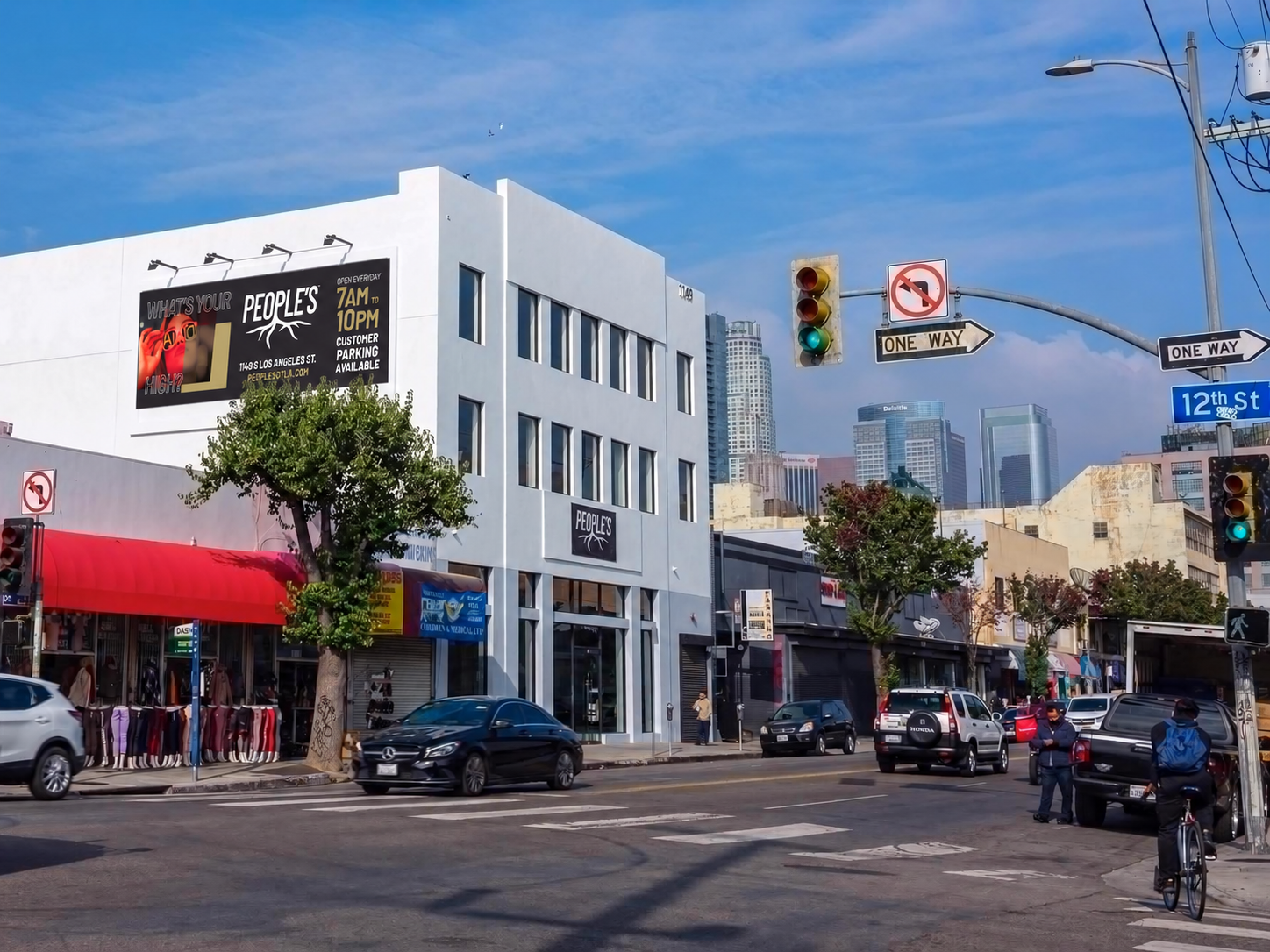
Commercial Story 009 / People’s DTLA
How do you meet people where they culture?
People’s DTLA used local partnerships, recurring events, and a physical retail endpoint to turn cultural relevance into store traffic, purchases, and return visits.
James Robertson helps regulated CPG and retail teams plan launches, build local partnerships, design shopper journeys, and turn programming into repeatable commercial systems.
The question
How do you launch a new retail destination in a neighborhood that already has its own culture?
People’s DTLA opened in 2021, as downtown Los Angeles was emerging from COVID disruption. The Flower District was not a blank canvas. Its commerce ran on local trust, familiar routines, Spanish-speaking workers, laborers, food vendors and shopkeepers who already knew one another.
The job was not simply to announce another cannabis store. It was to make a large, two-level retail destination feel useful and visible in a place where foot traffic could not be assumed.
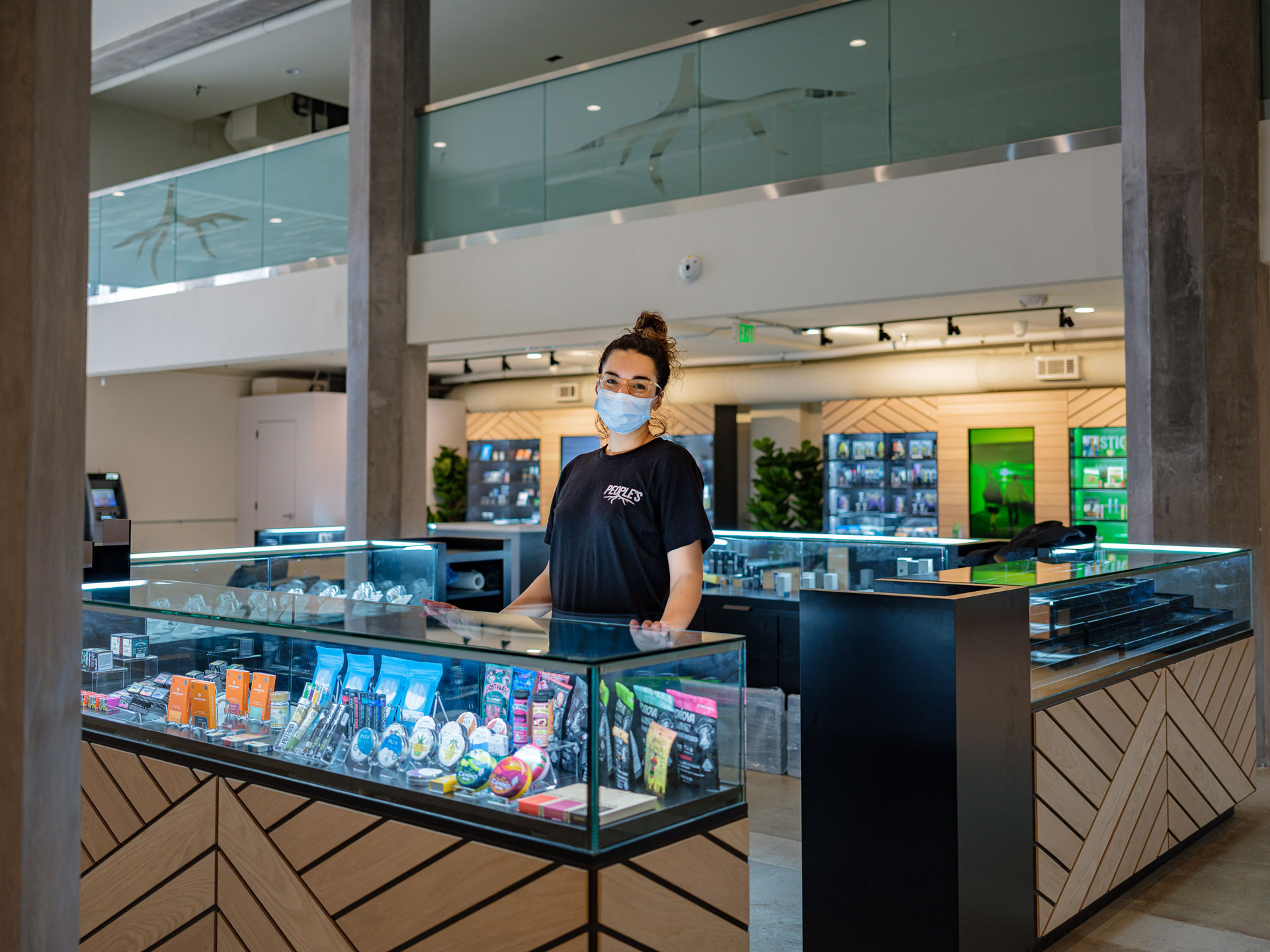
Inside the destination
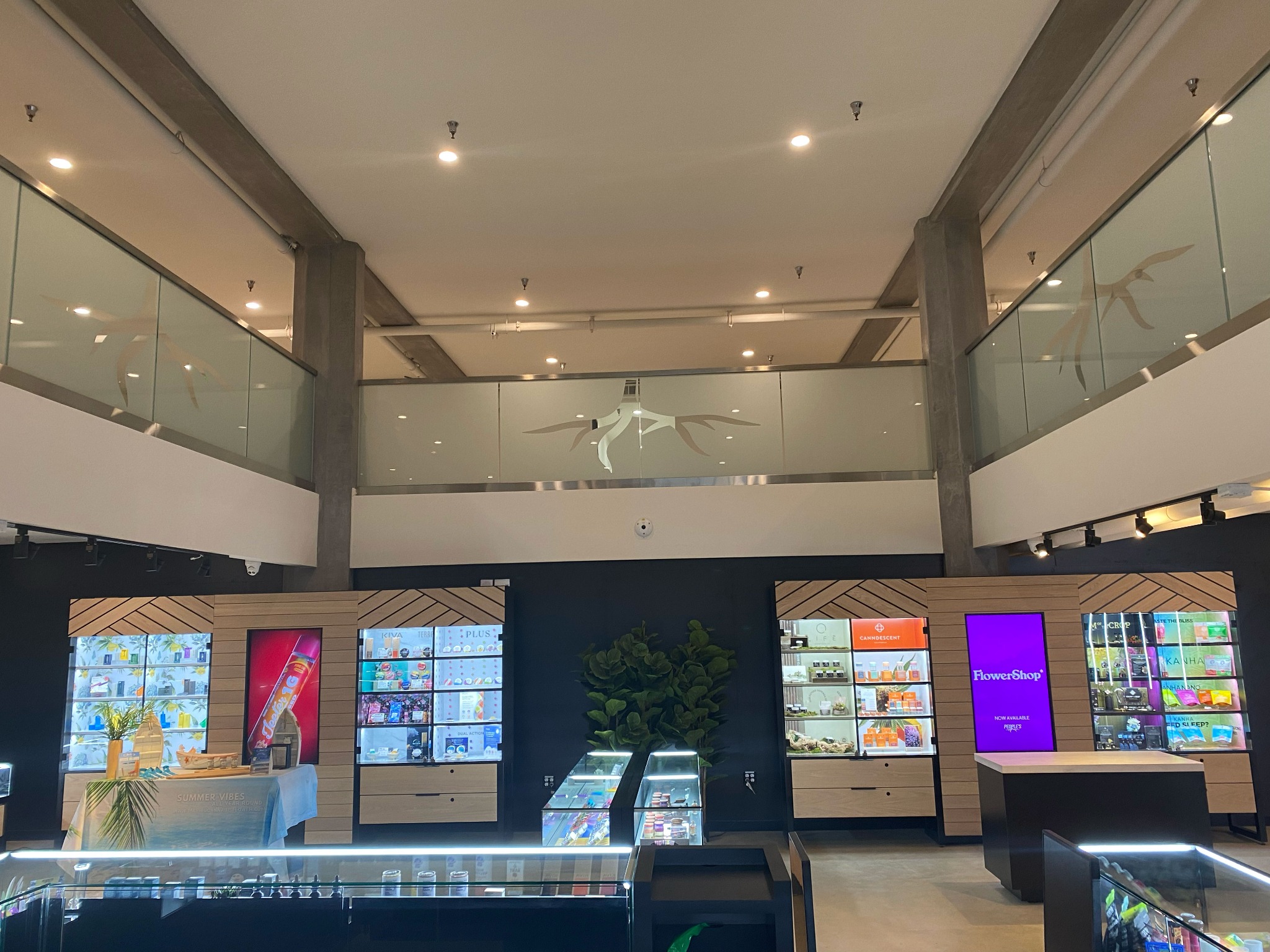
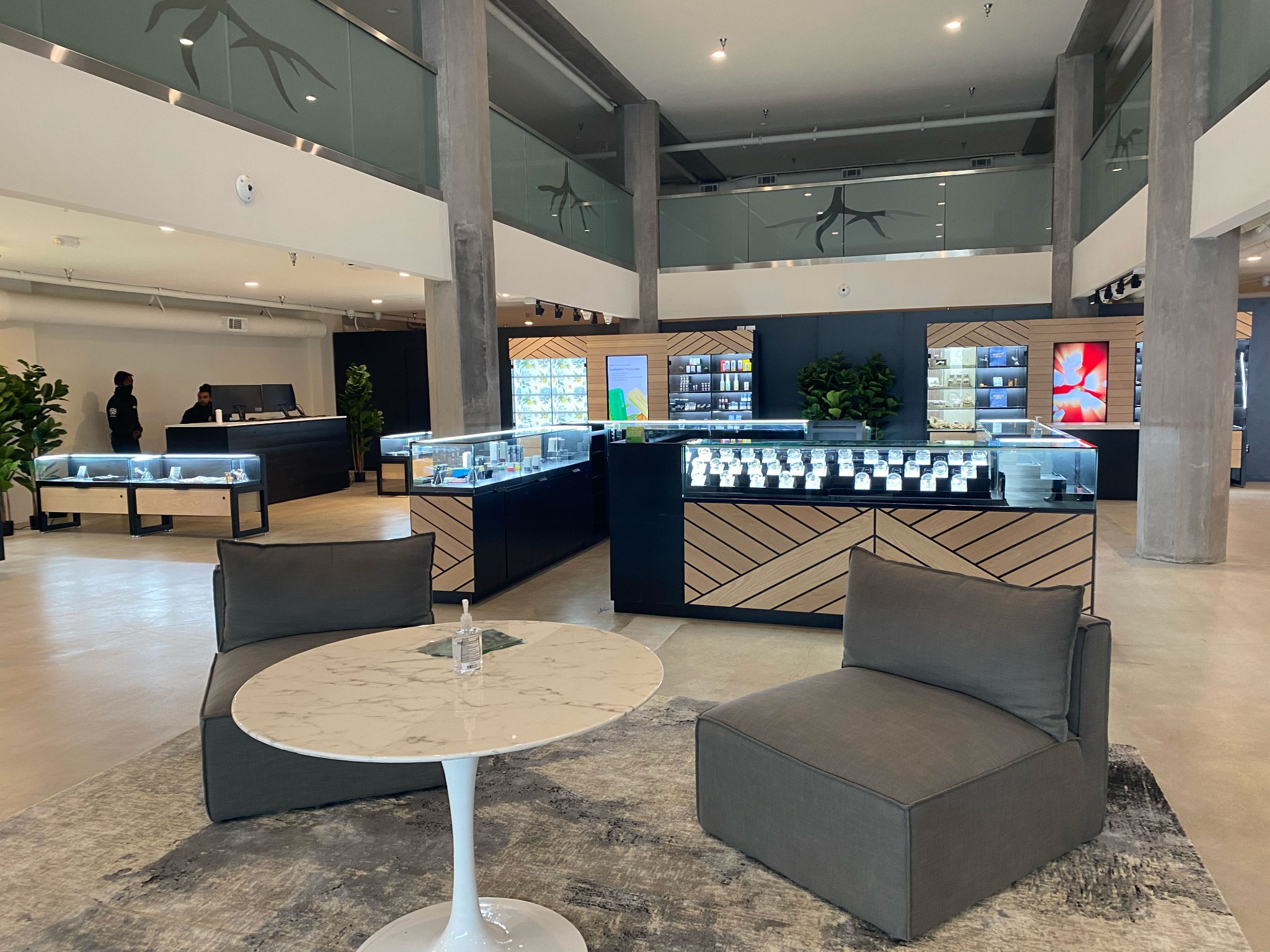
A two-level retail destination designed for discovery, movement and return visits.
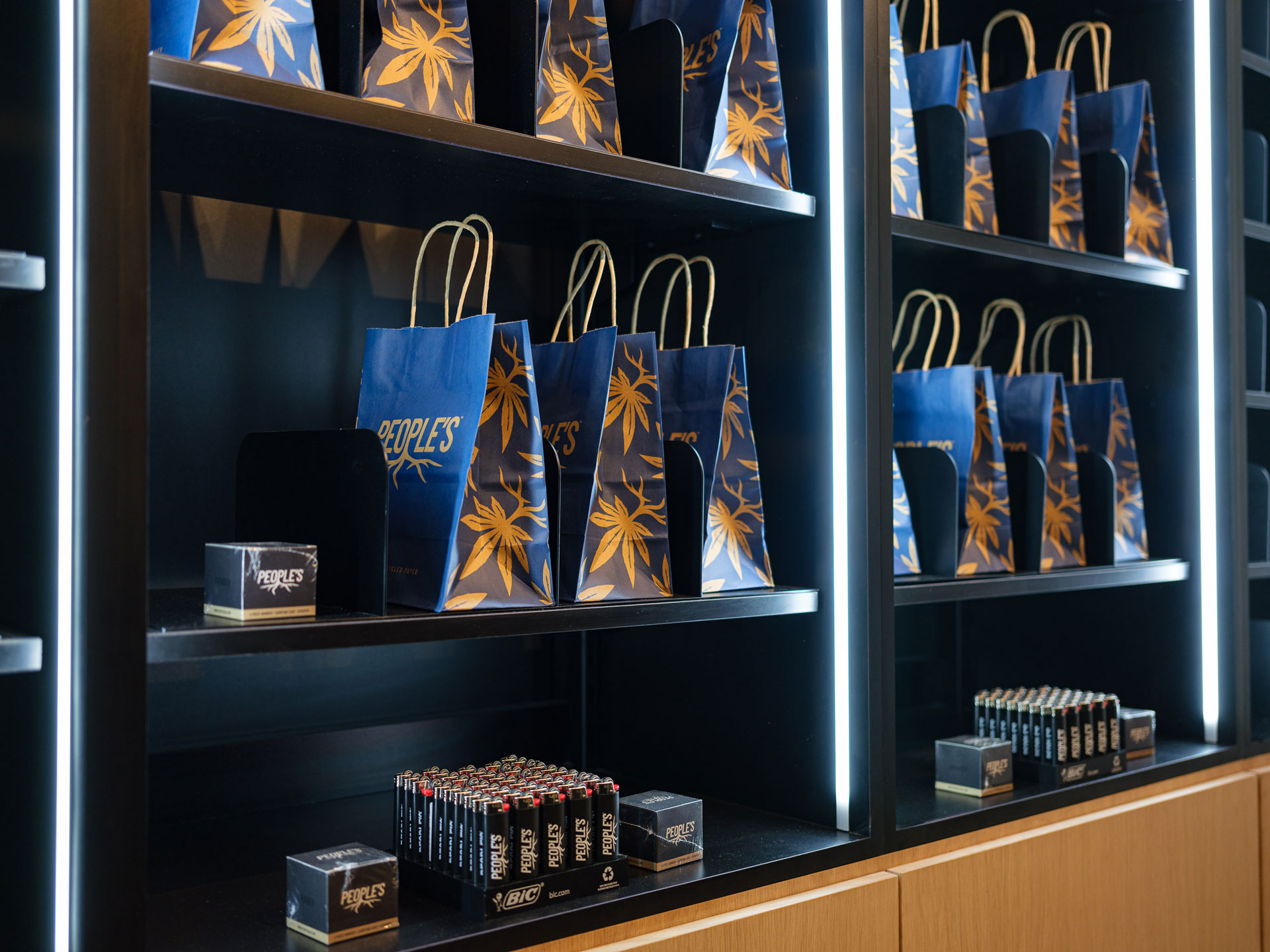
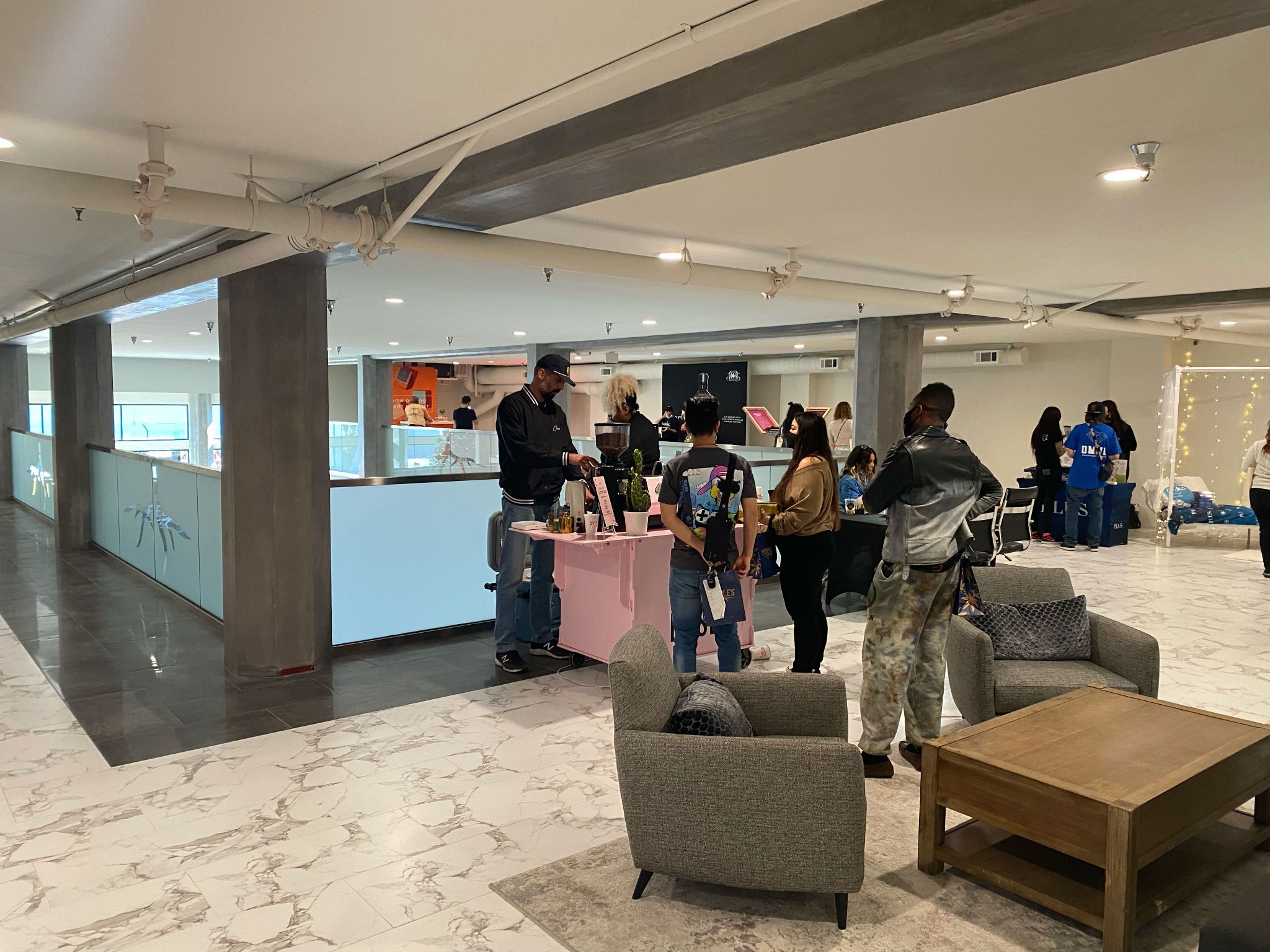
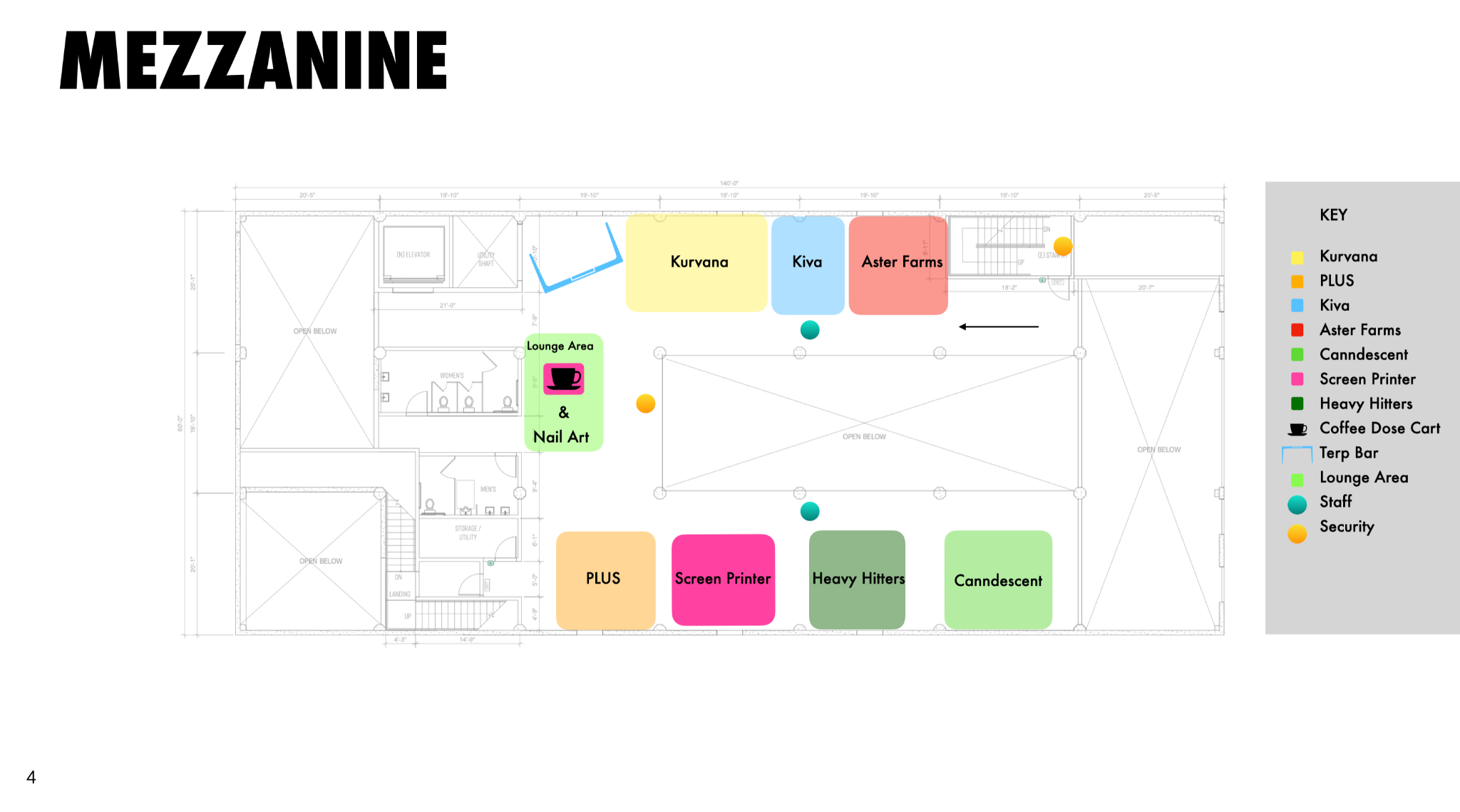
People’s DTLA was designed for free-range shopping: visitors could move through the retail floor at their own pace, browse product displays, and continue up to a mezzanine that showcased local vendors during activations and recurring tentpoles. The layout made the store feel like a destination before it became a transaction.
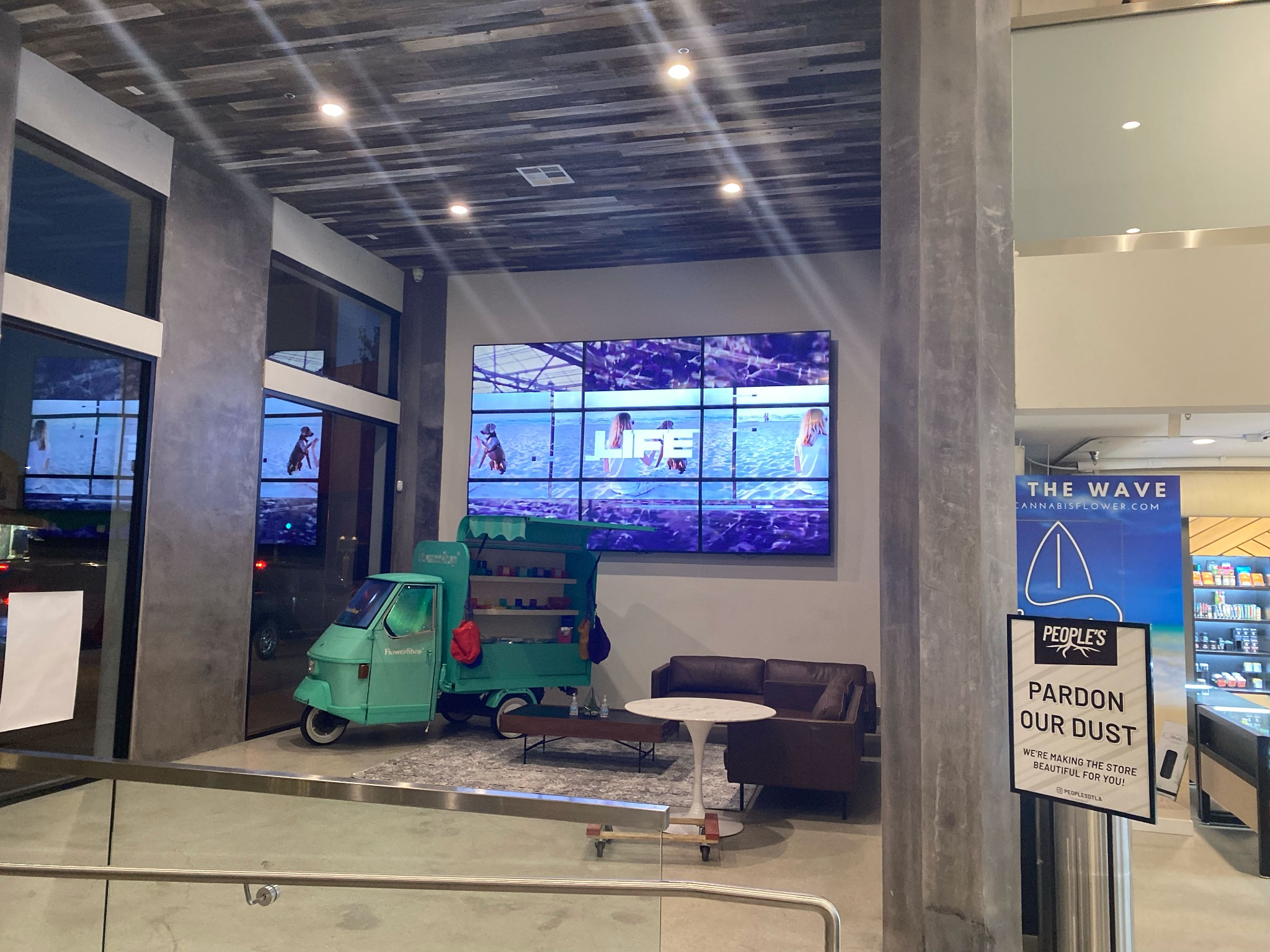
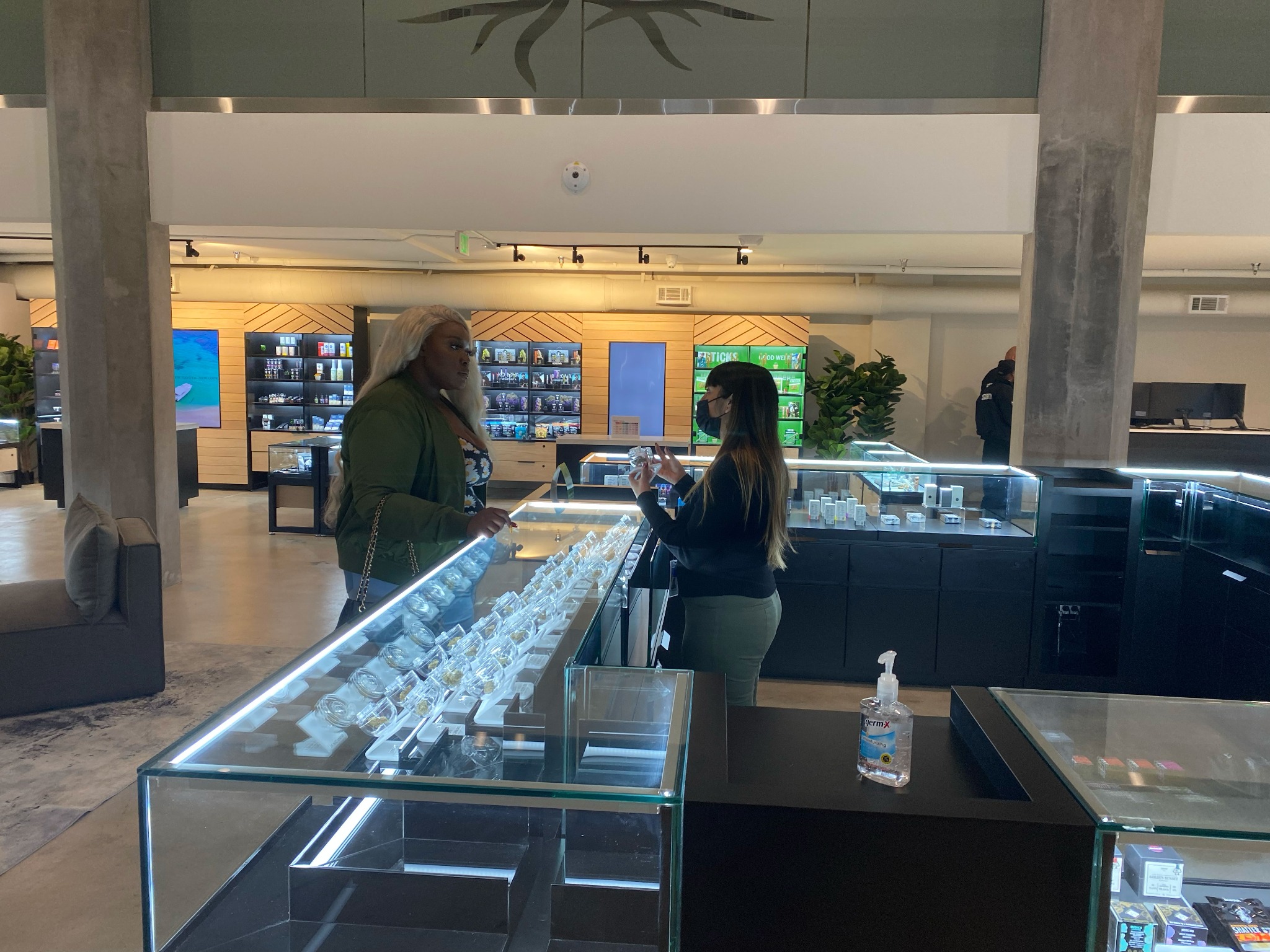
Grand opening
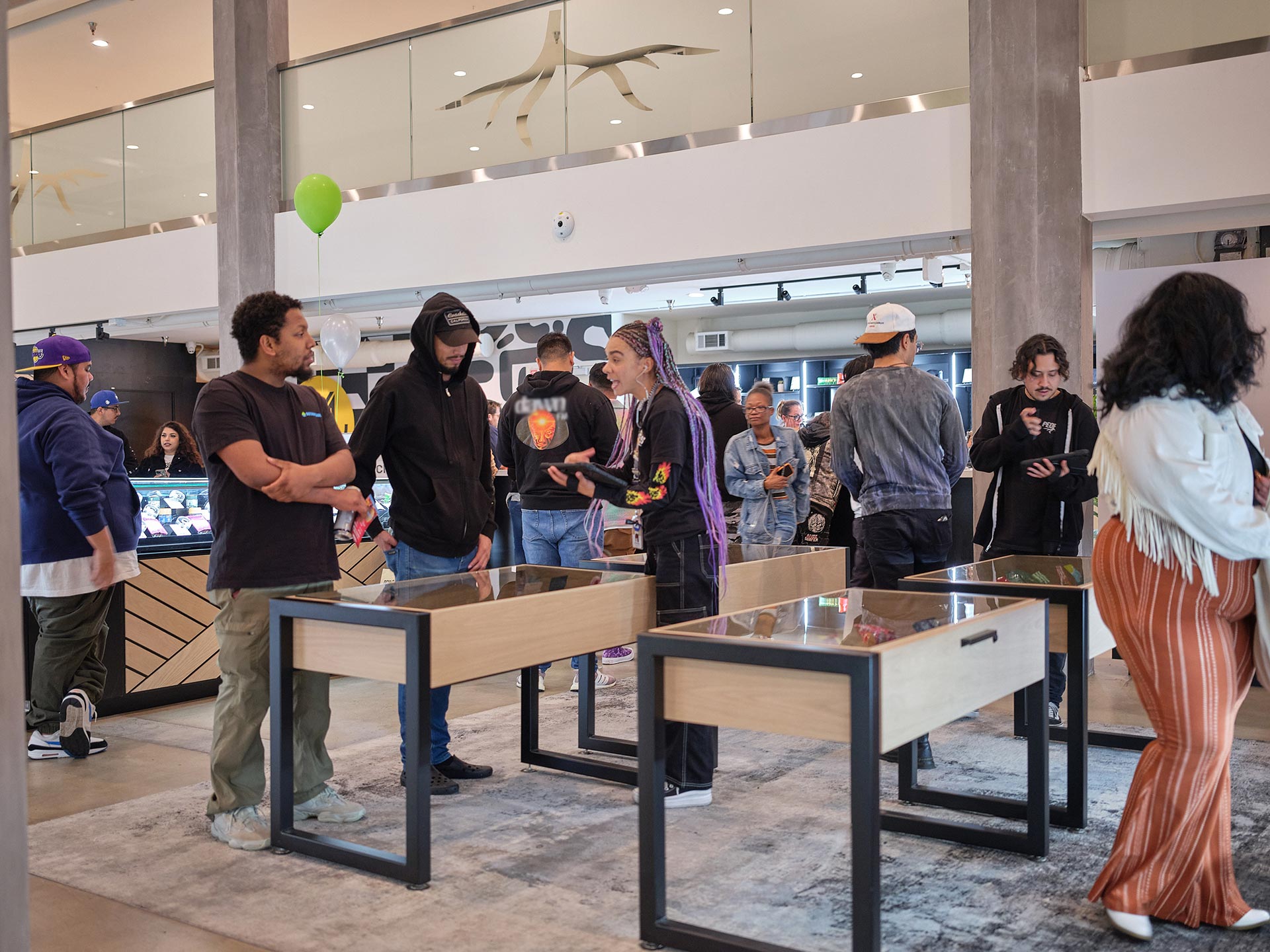
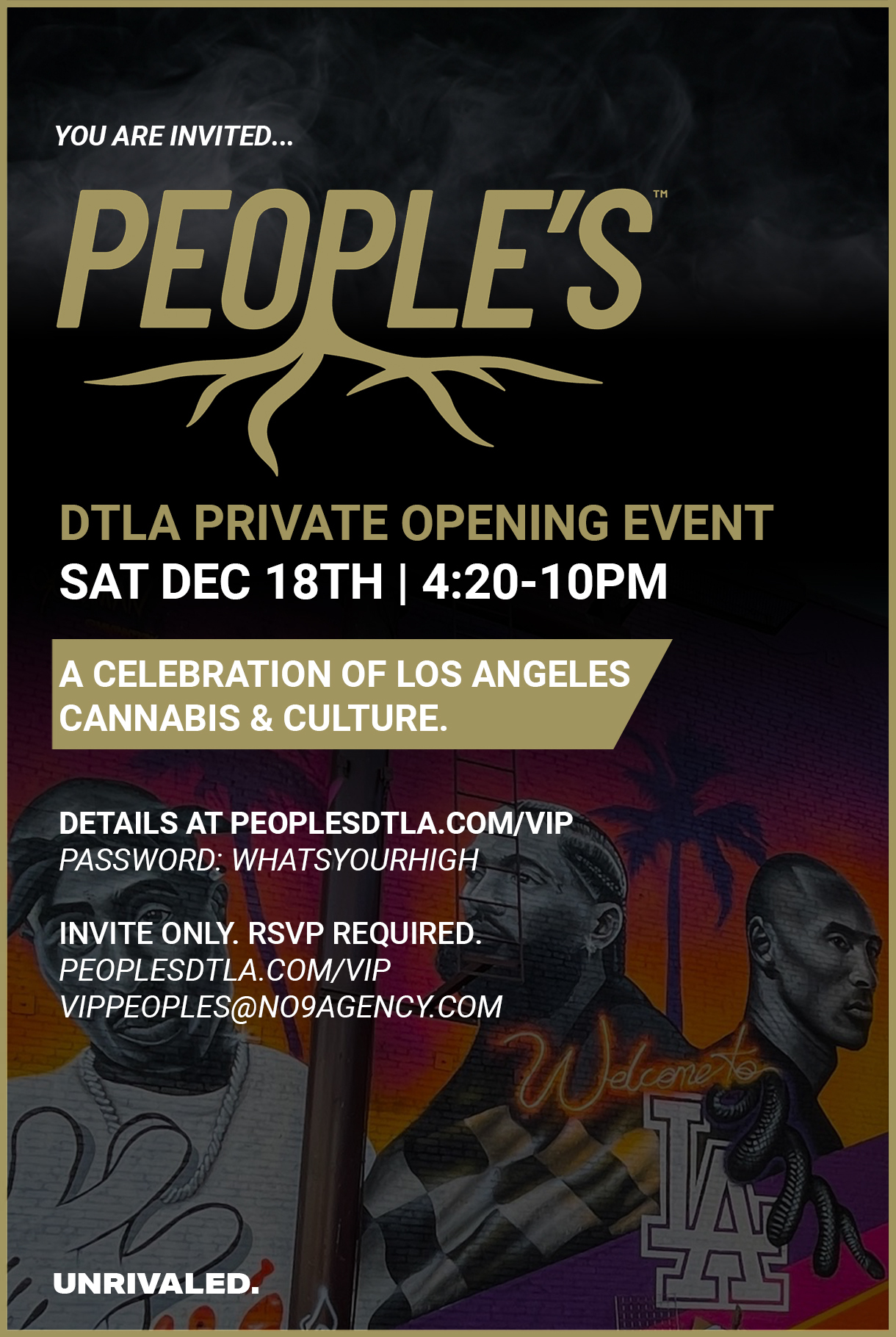
An opening invitation carried through street, screen and a live retail environment.
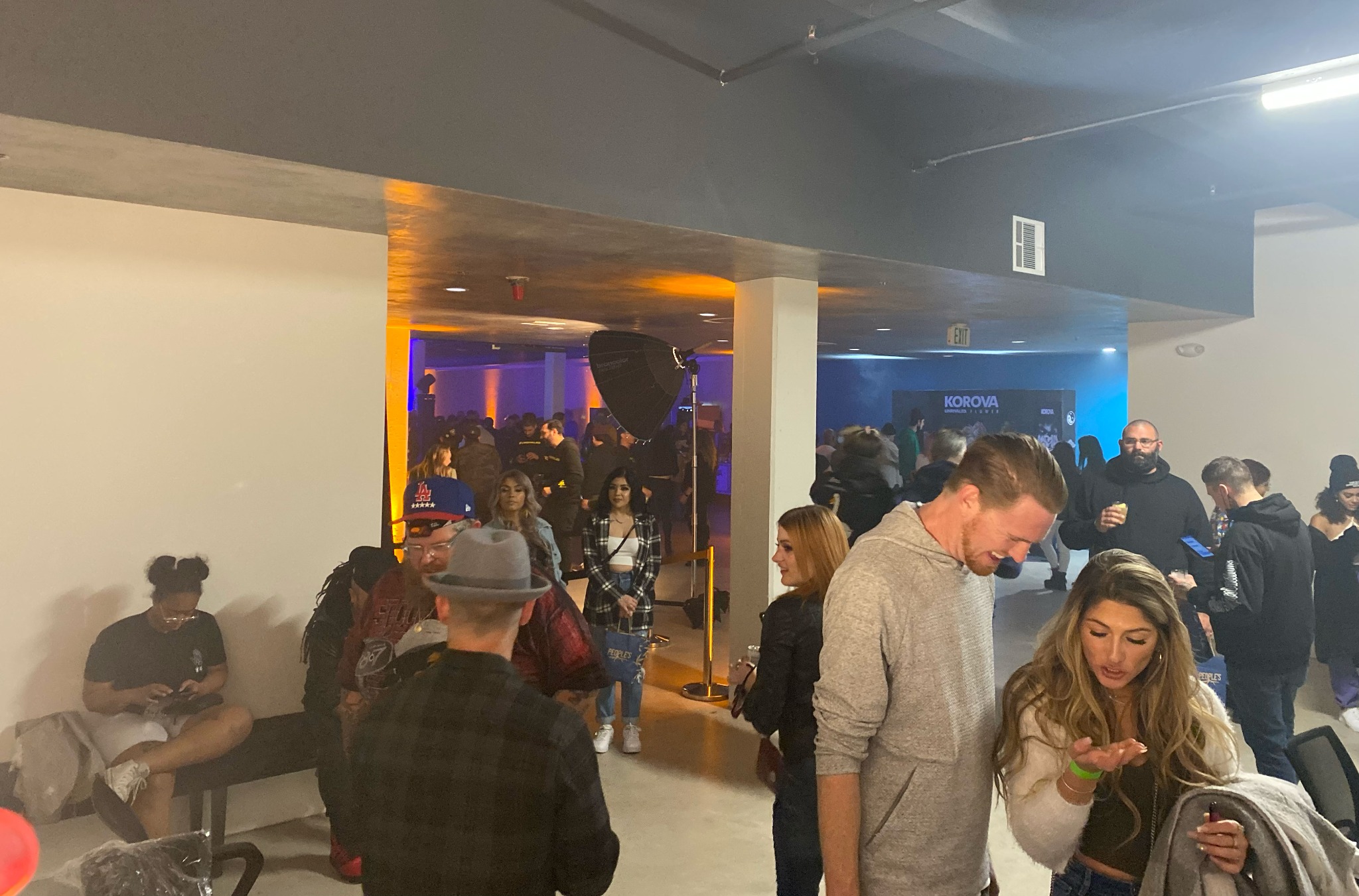
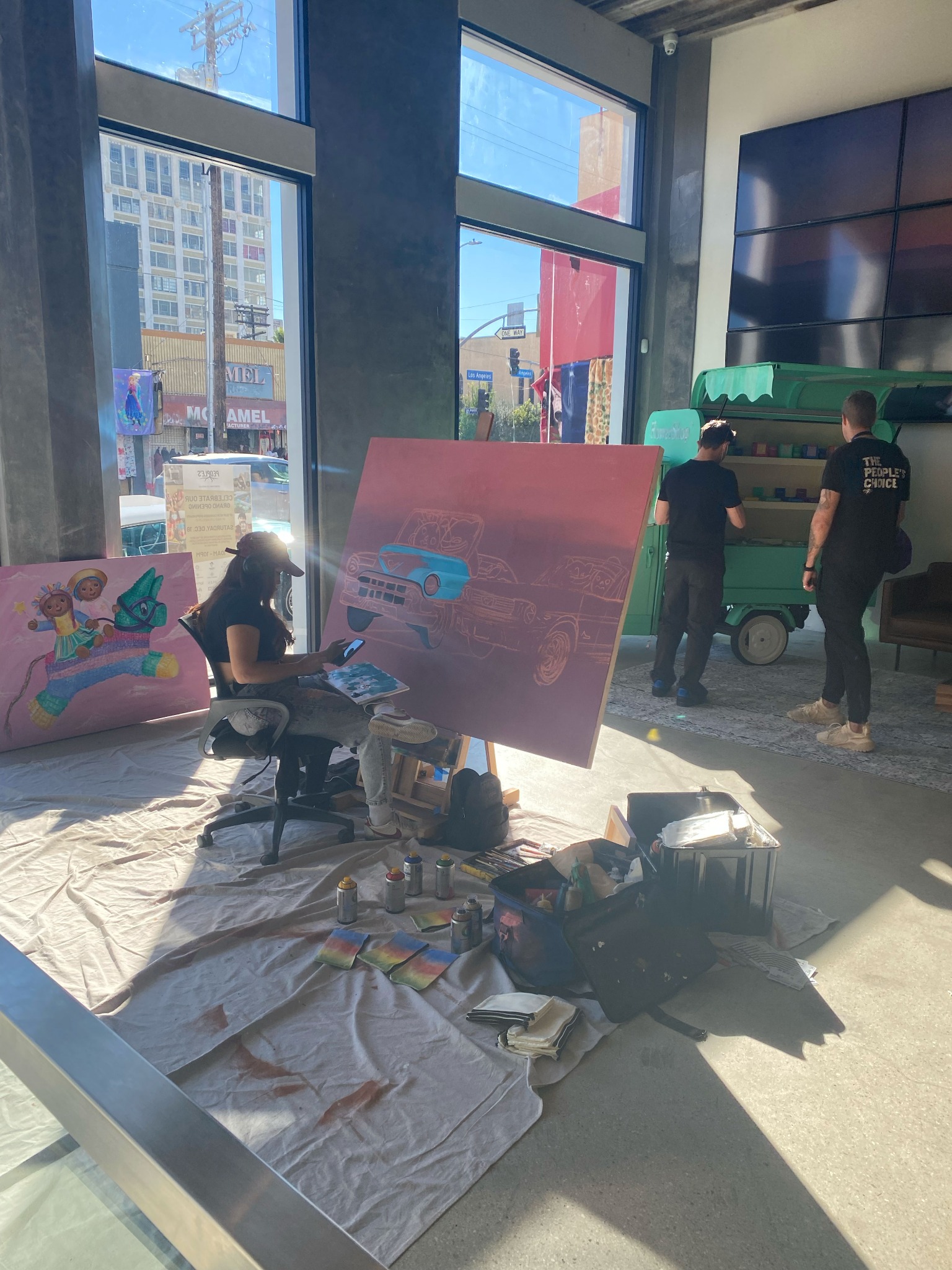
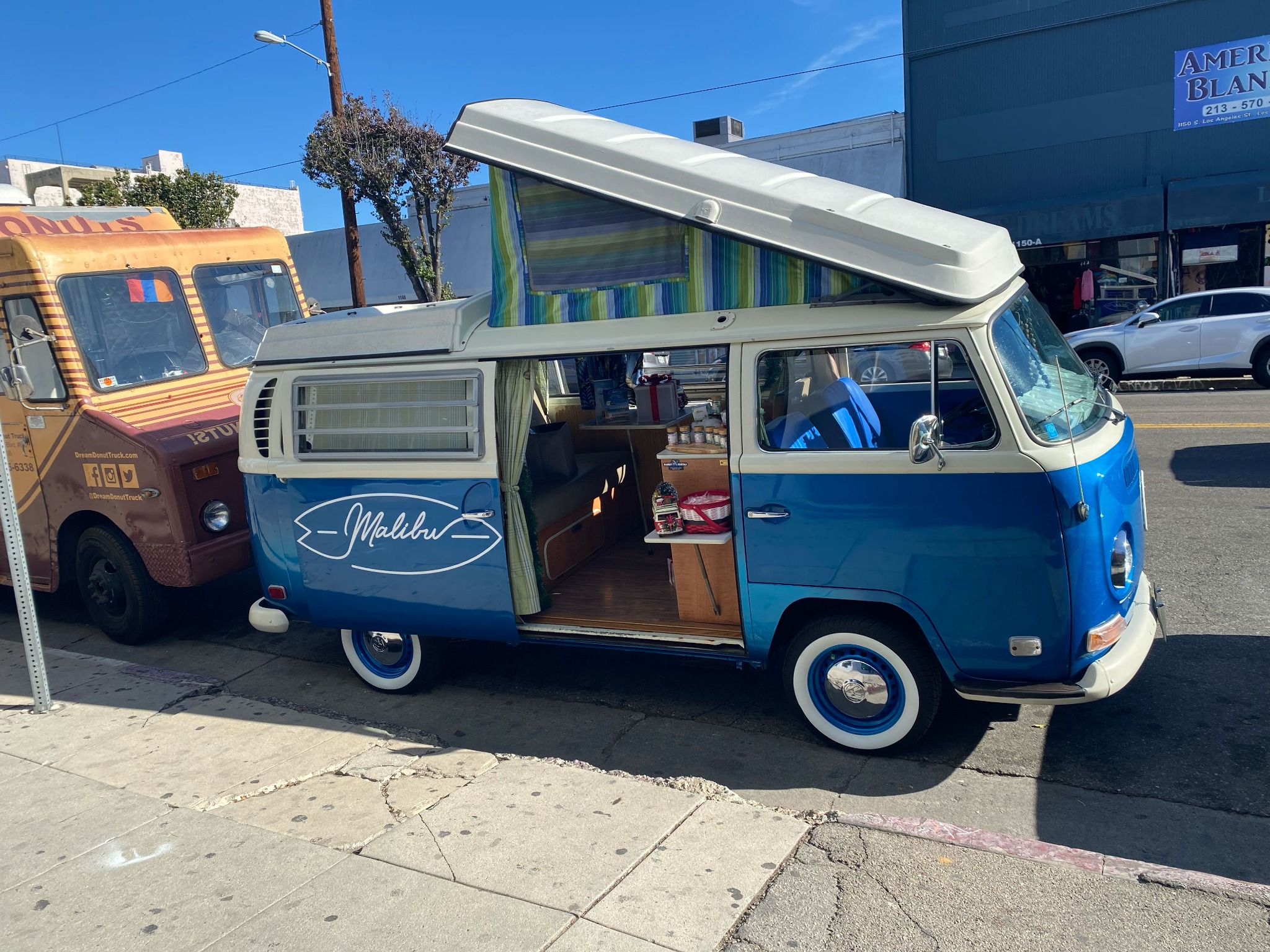
The December 2021 opening was designed as a full-day activation rather than a single launch moment: a street-level invitation, partner participation, food trucks, live art and a retail floor that stayed active as guests moved through the building. The point was to make the store legible as a place to visit, browse and buy.
Approximate door traffic; not a purchase-conversion count.


Before the campaign
Three constraints shaped every decision.
01 / Traffic
Foot traffic could not be assumed.
A depressed, post-COVID corridor required a reason to visit, not just an address to advertise.
02 / Relevance
A familiar brand still had to earn its place.
People’s carried equity from Orange County, but DTLA required local fluency and price-aware merchandising.
03 / Handoff
Participation had to lead somewhere.
Events needed a clear route from attention to the retail floor and a reason to complete a purchase.
The first decision / Introduction
Use neighboring commerce as the introduction.
We supplied nearby businesses with coffee collars, coasters and napkins carrying their identity on one side and People’s with a QR pathway to the menu on the other. These were useful materials in an existing routine, not branded clutter added to the street.
A receipt from a surrounding business unlocked 20% off at People’s. The partner got utility; the customer got an understandable next step.
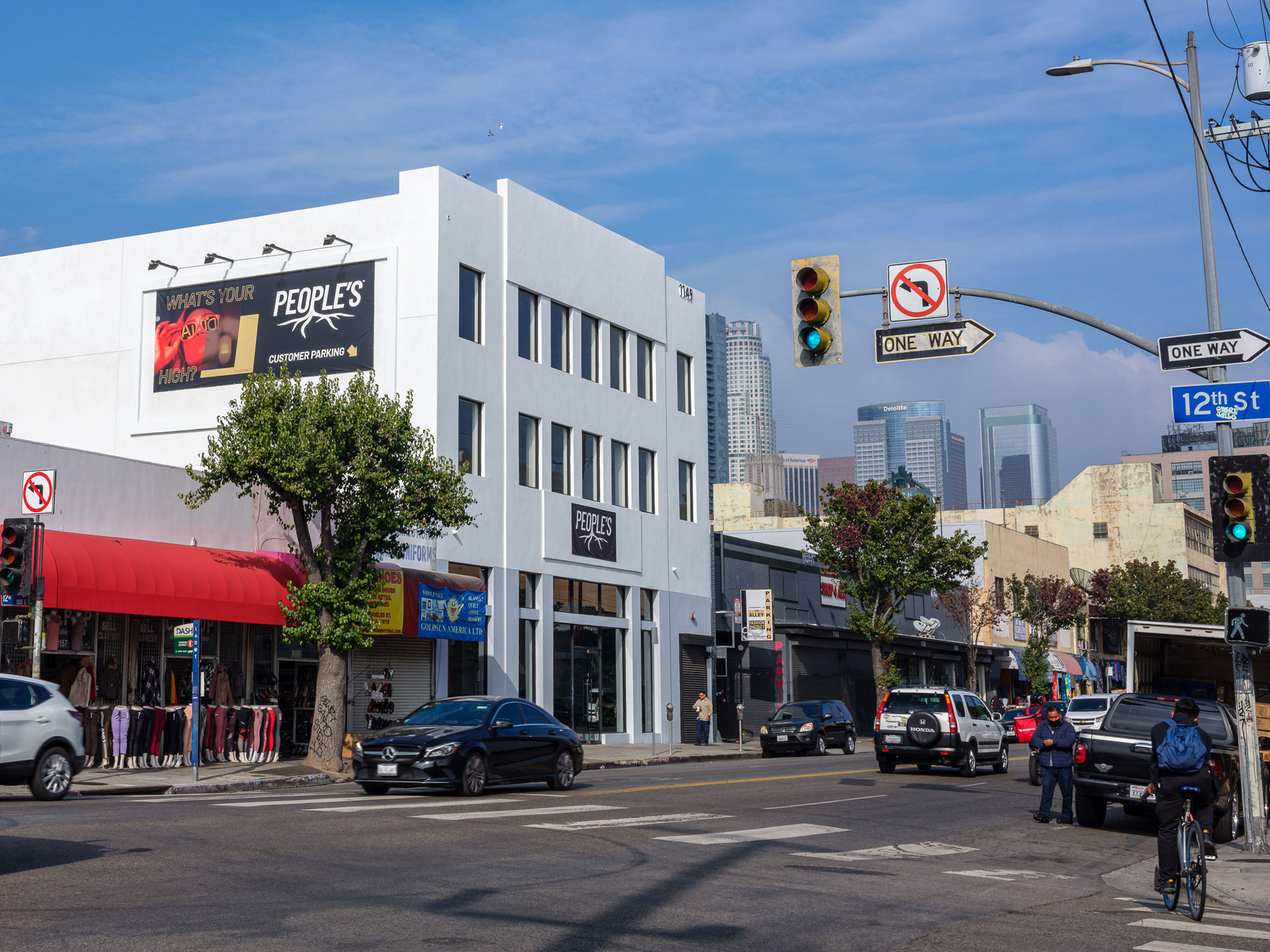
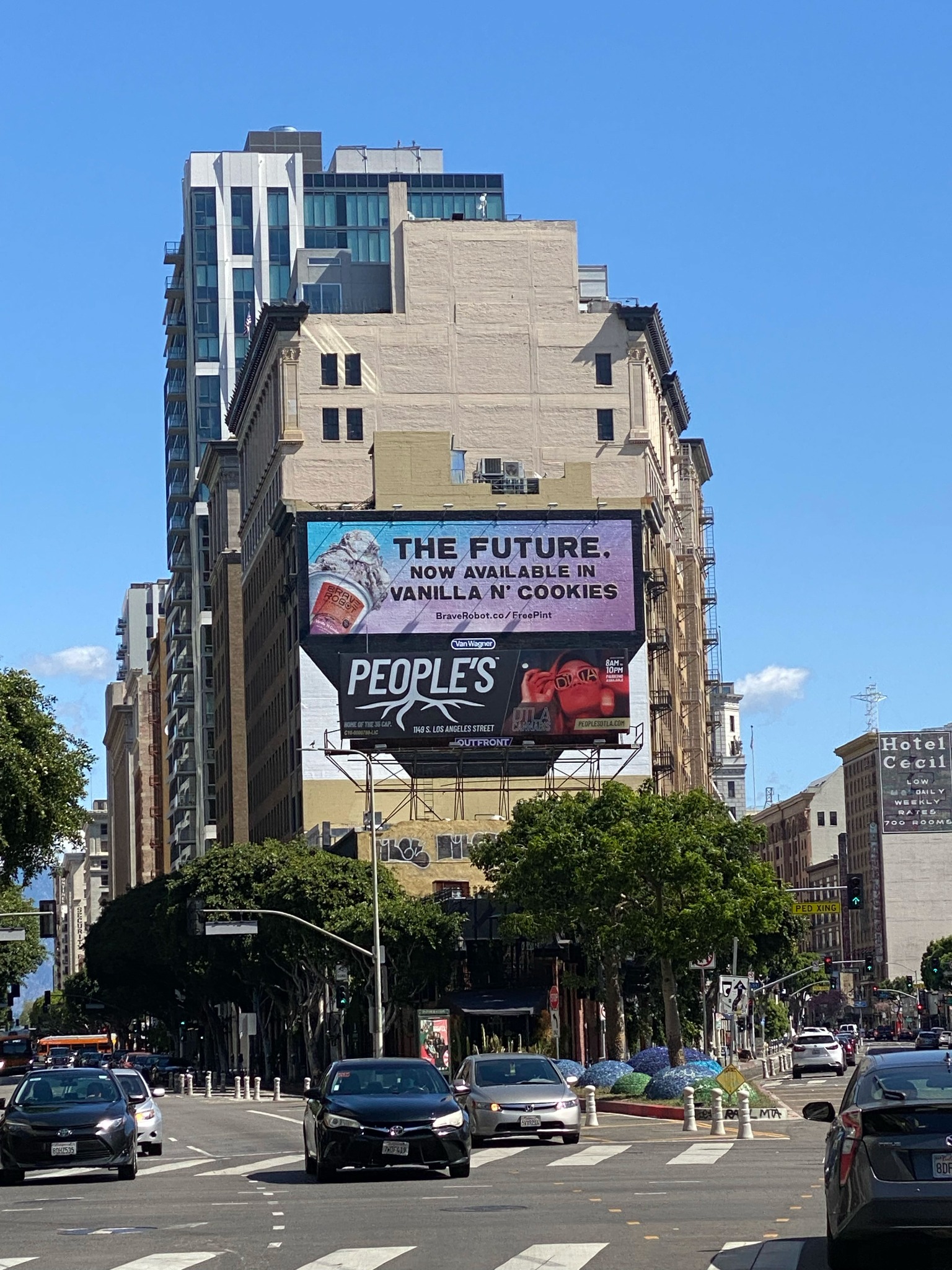
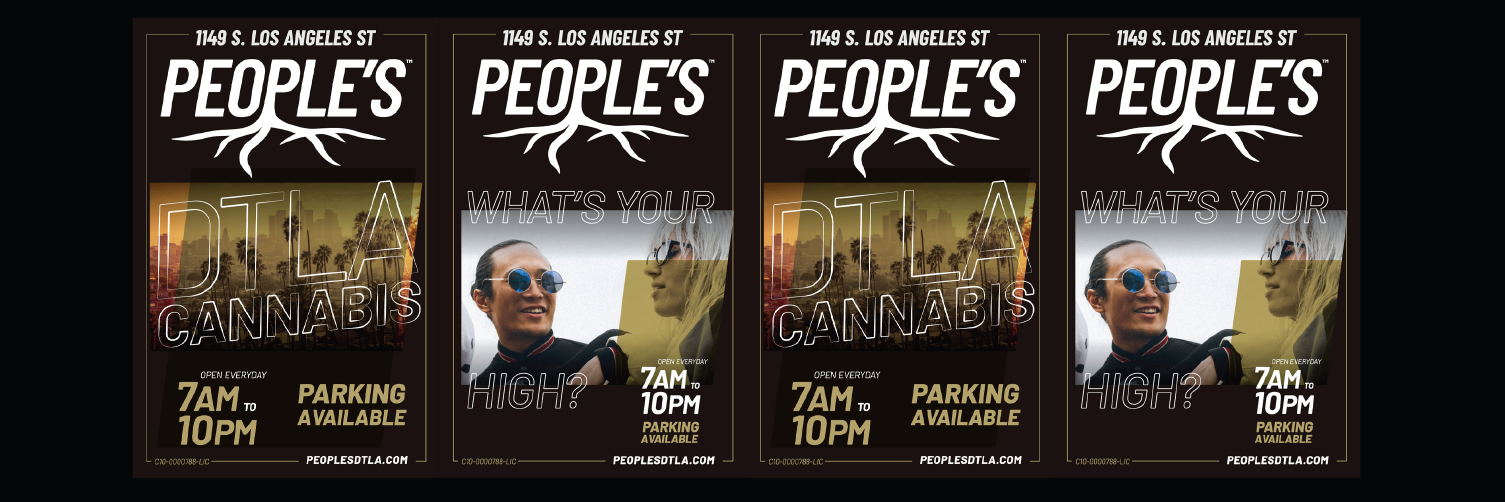
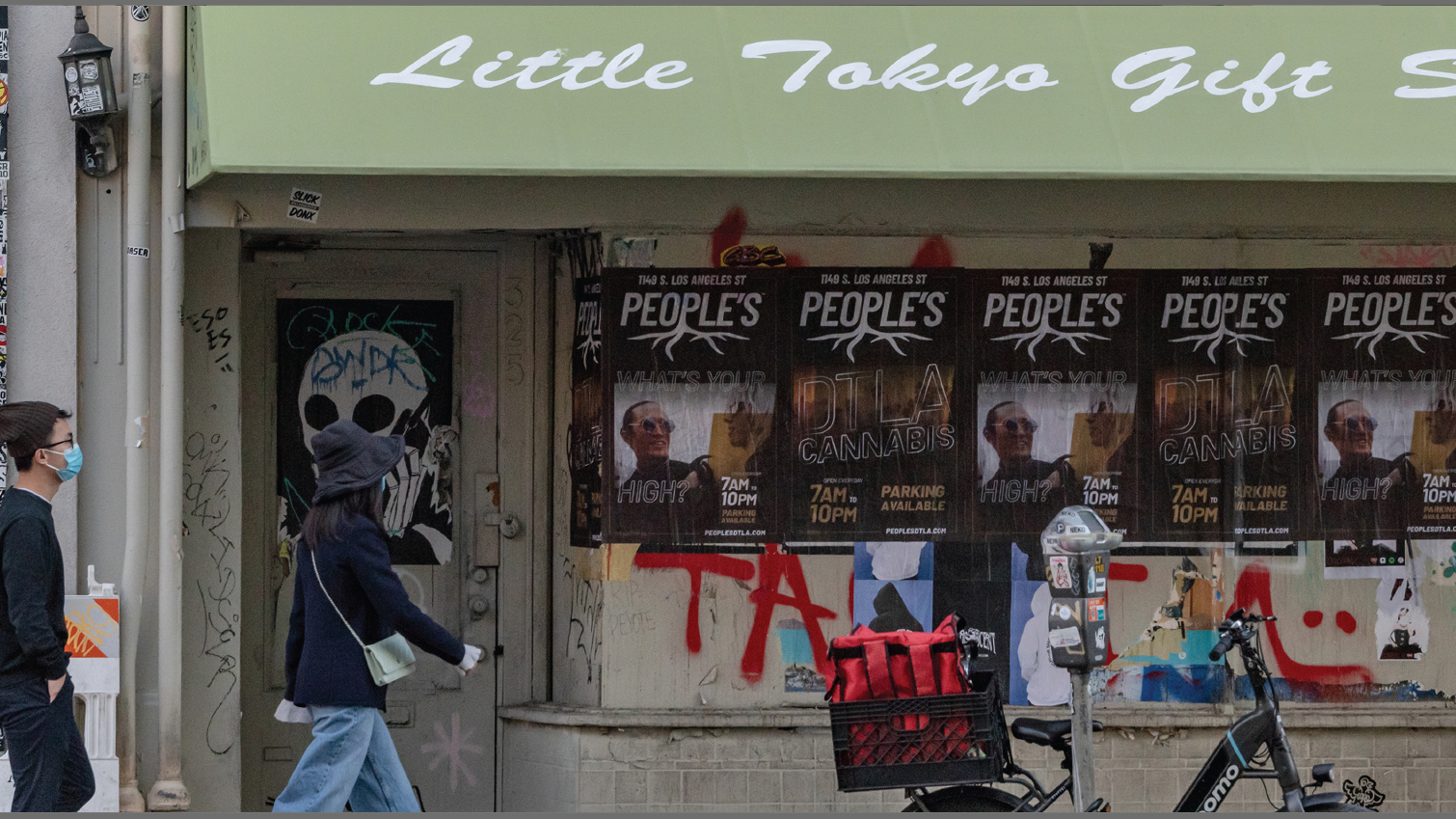
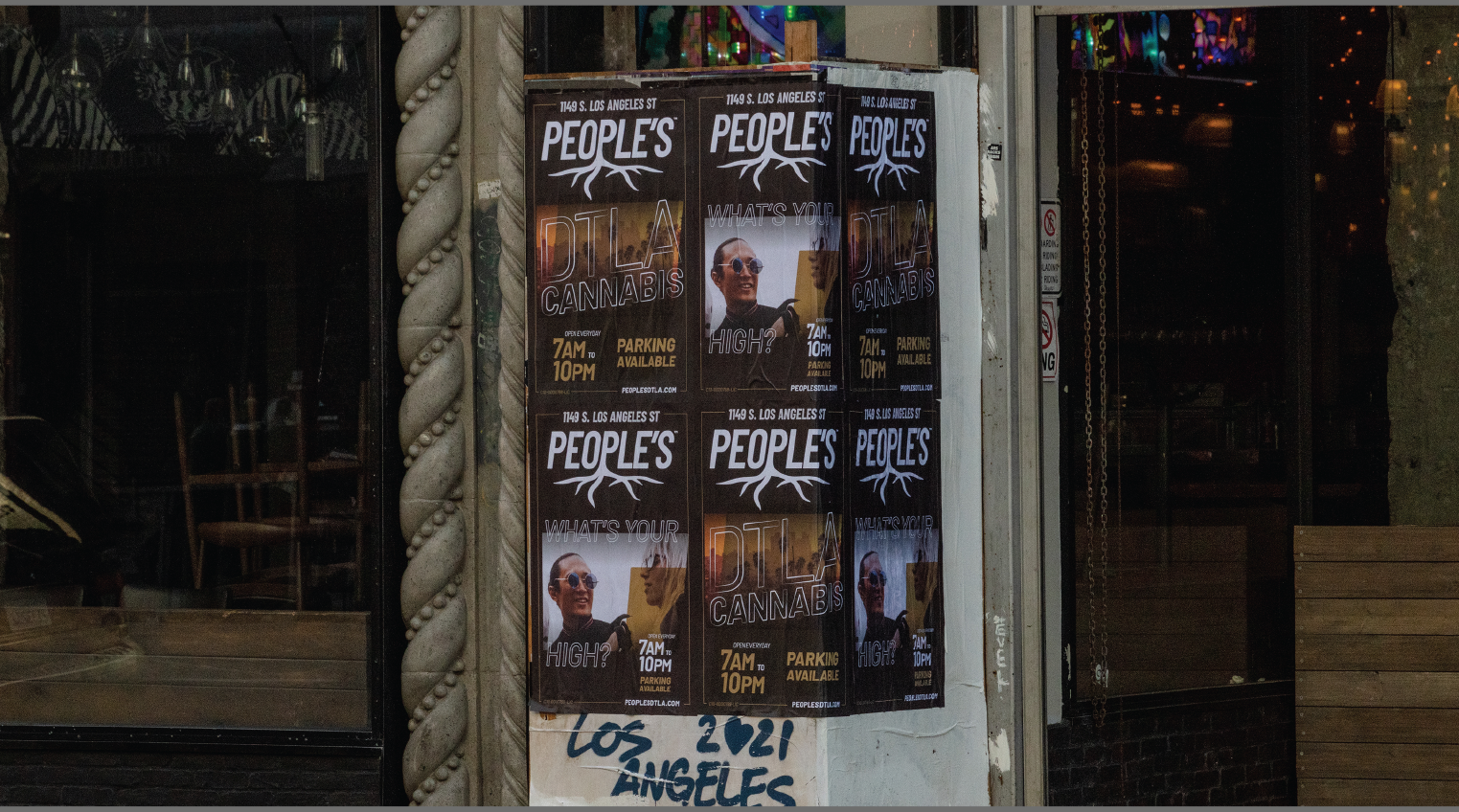
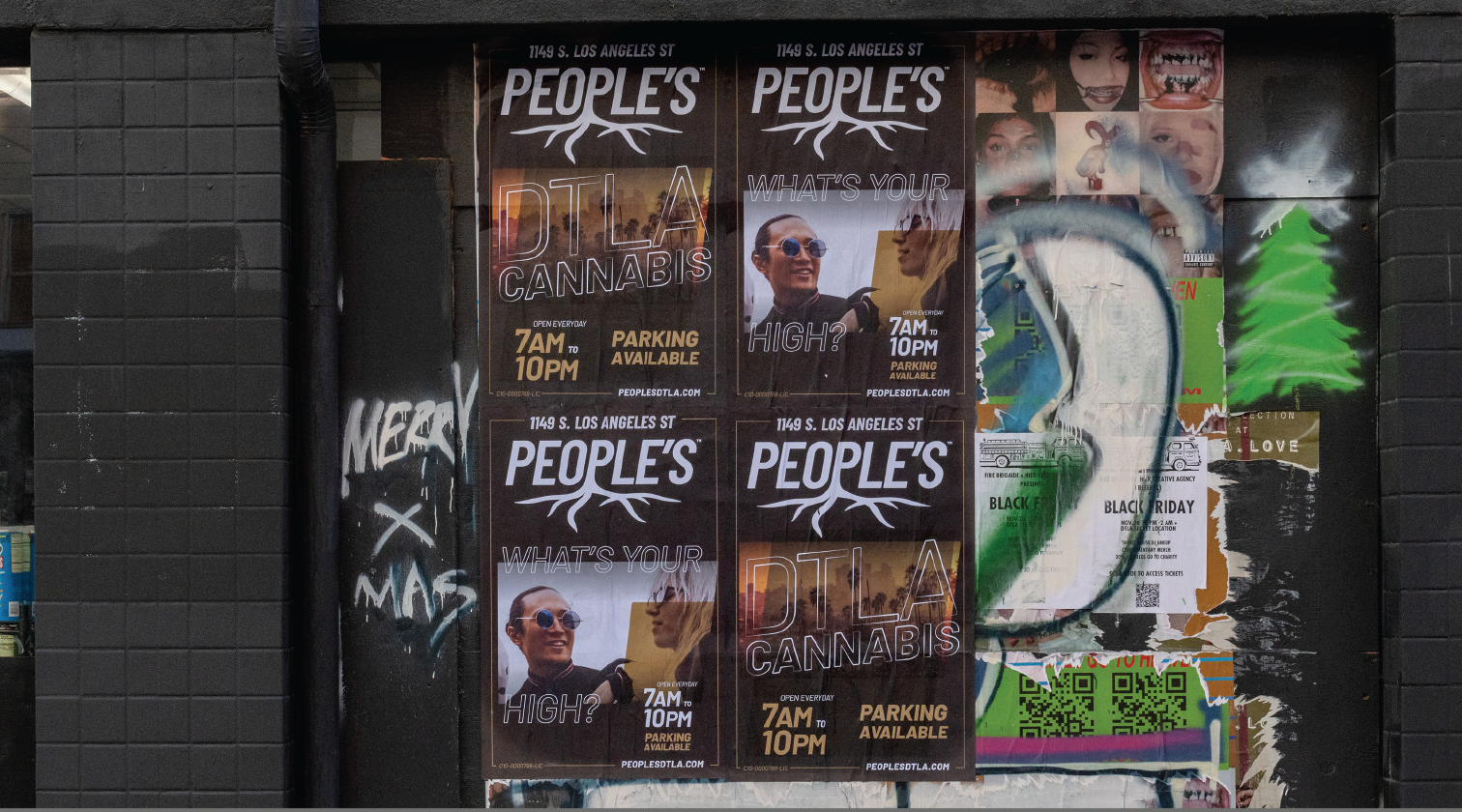
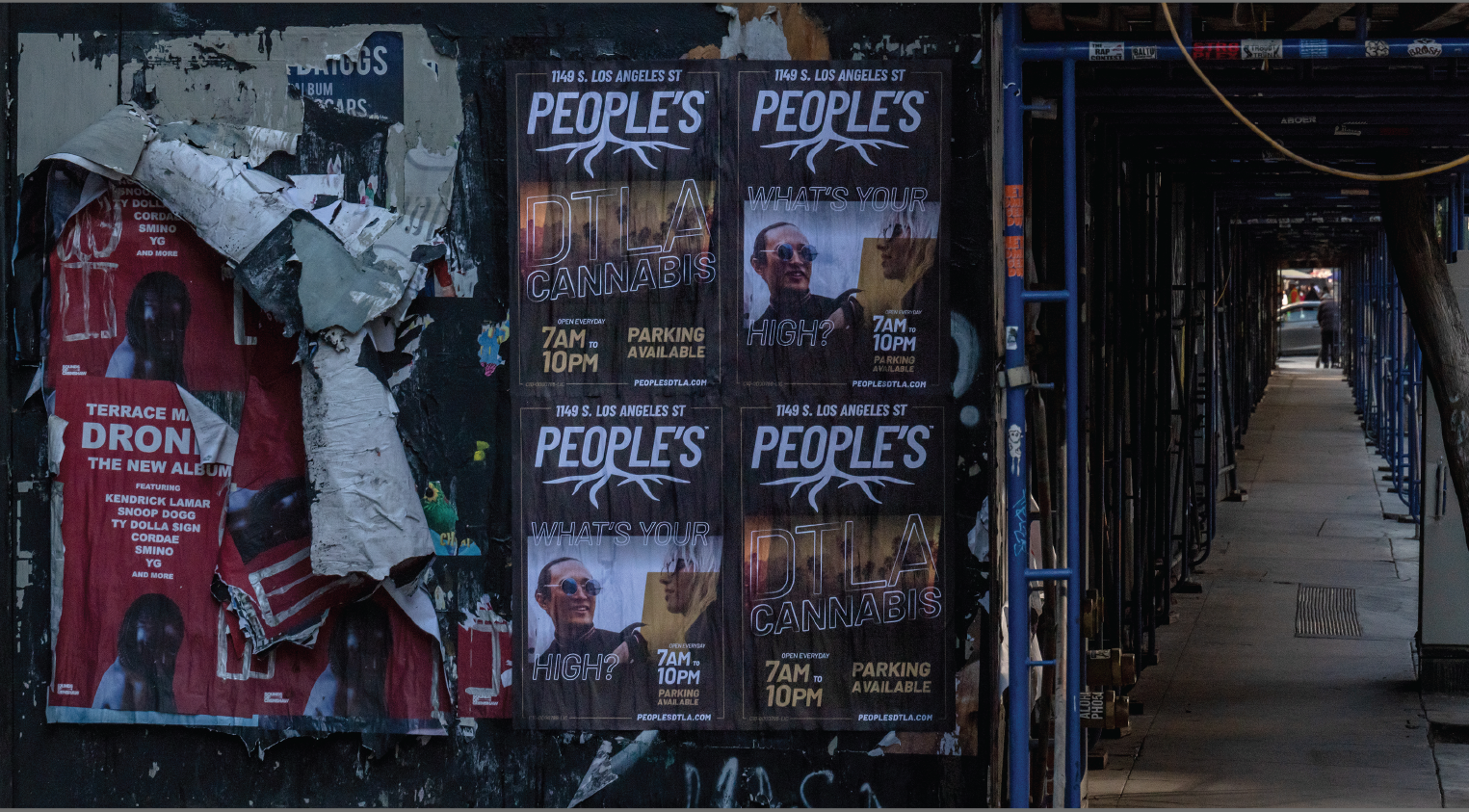
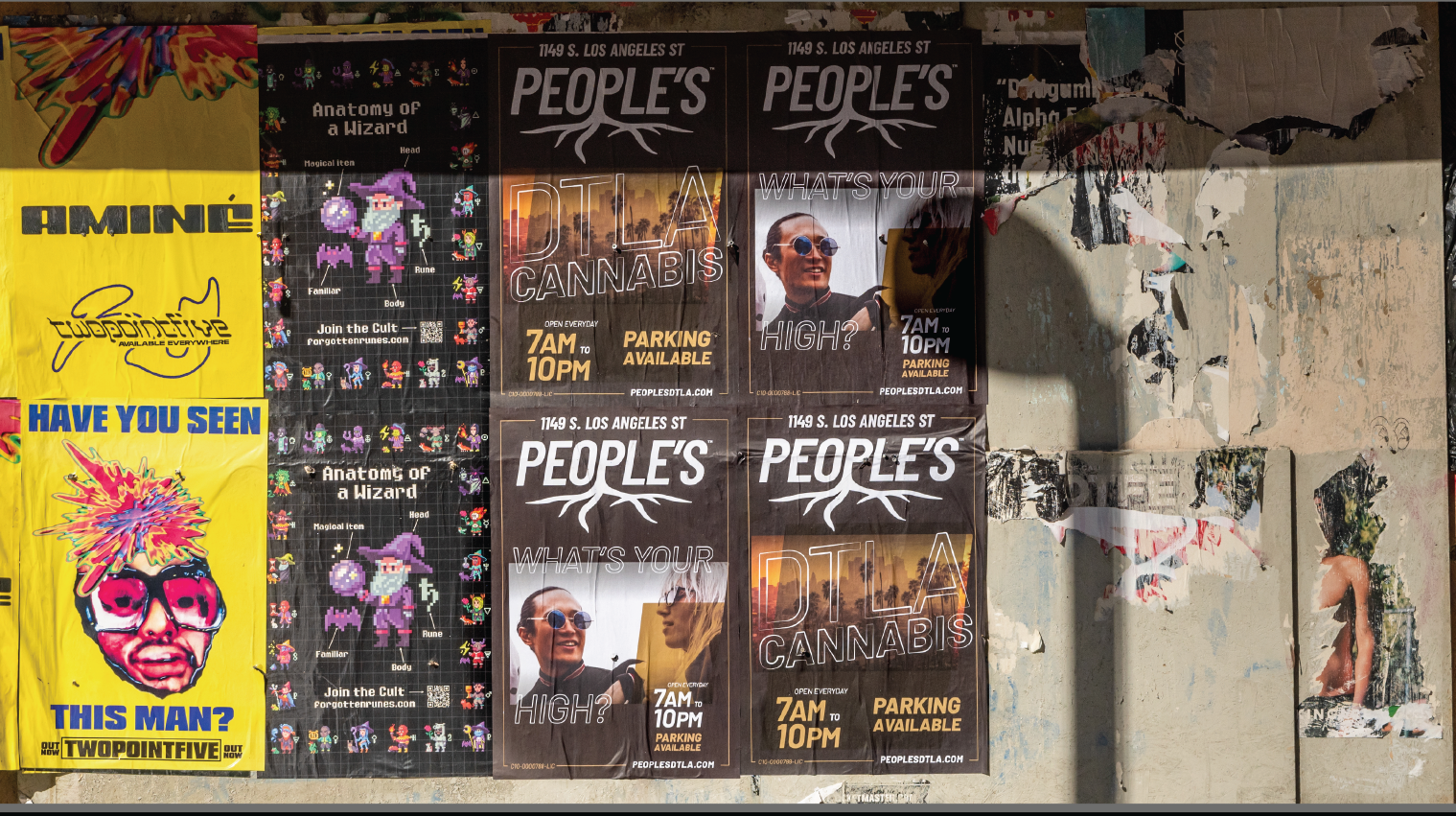
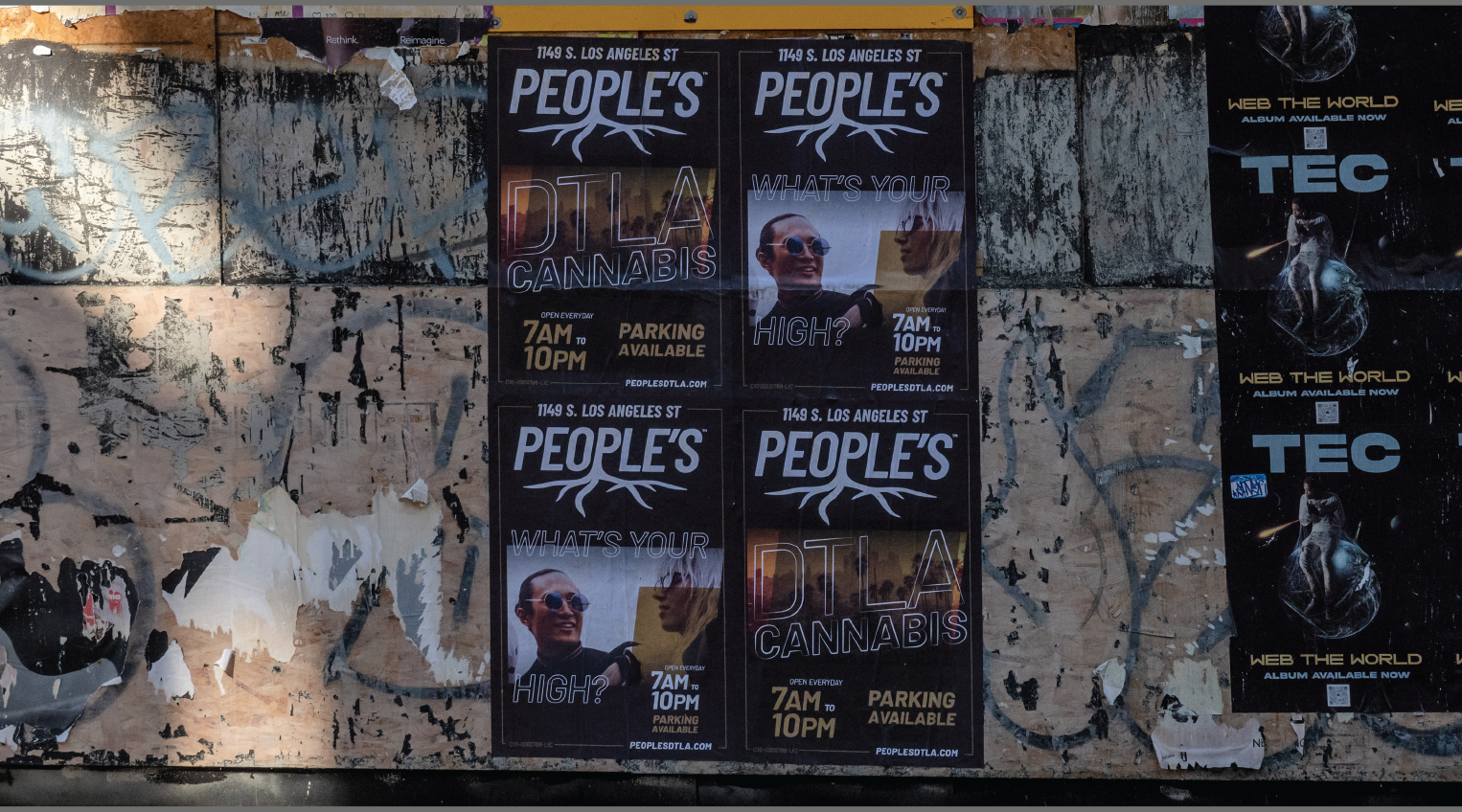
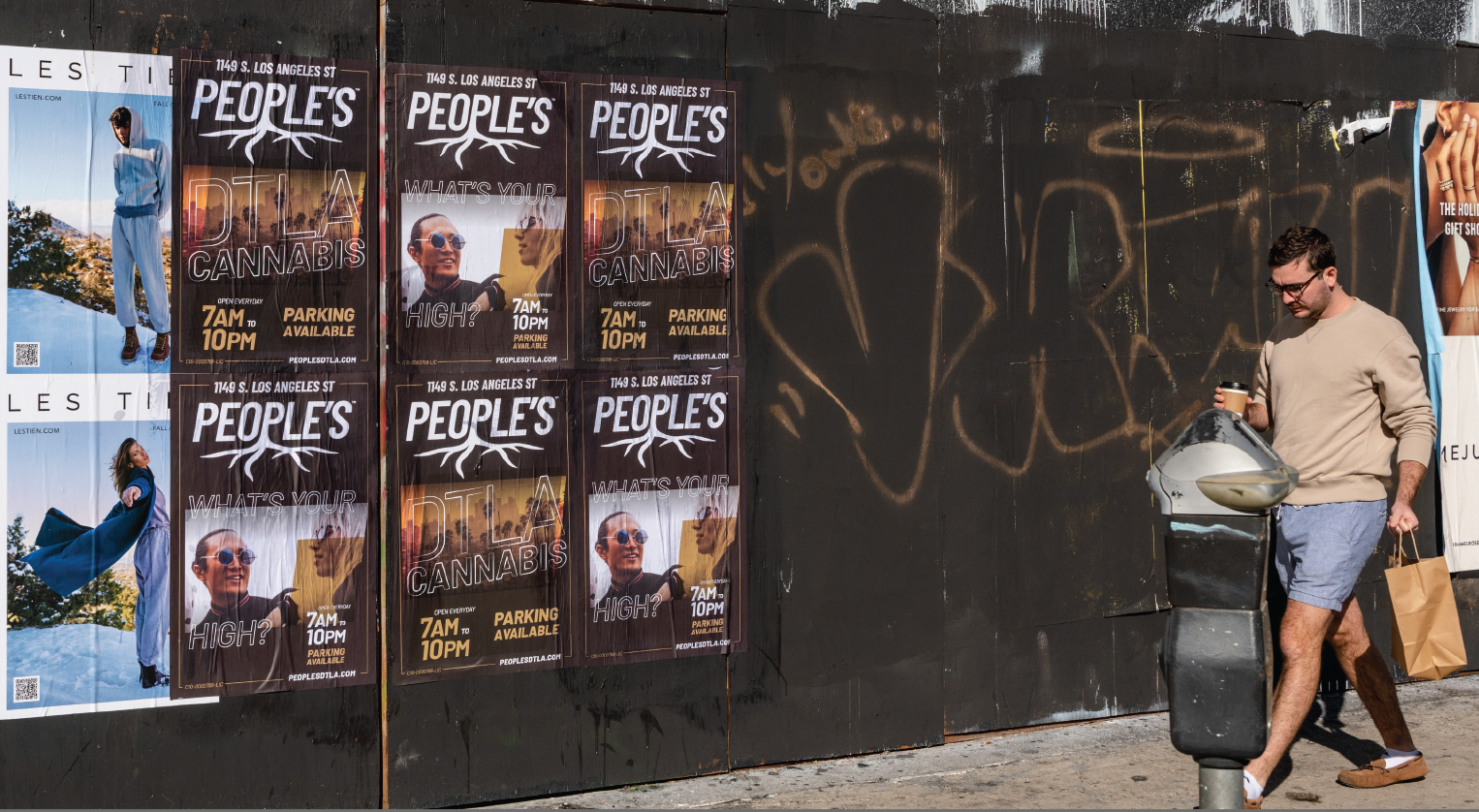
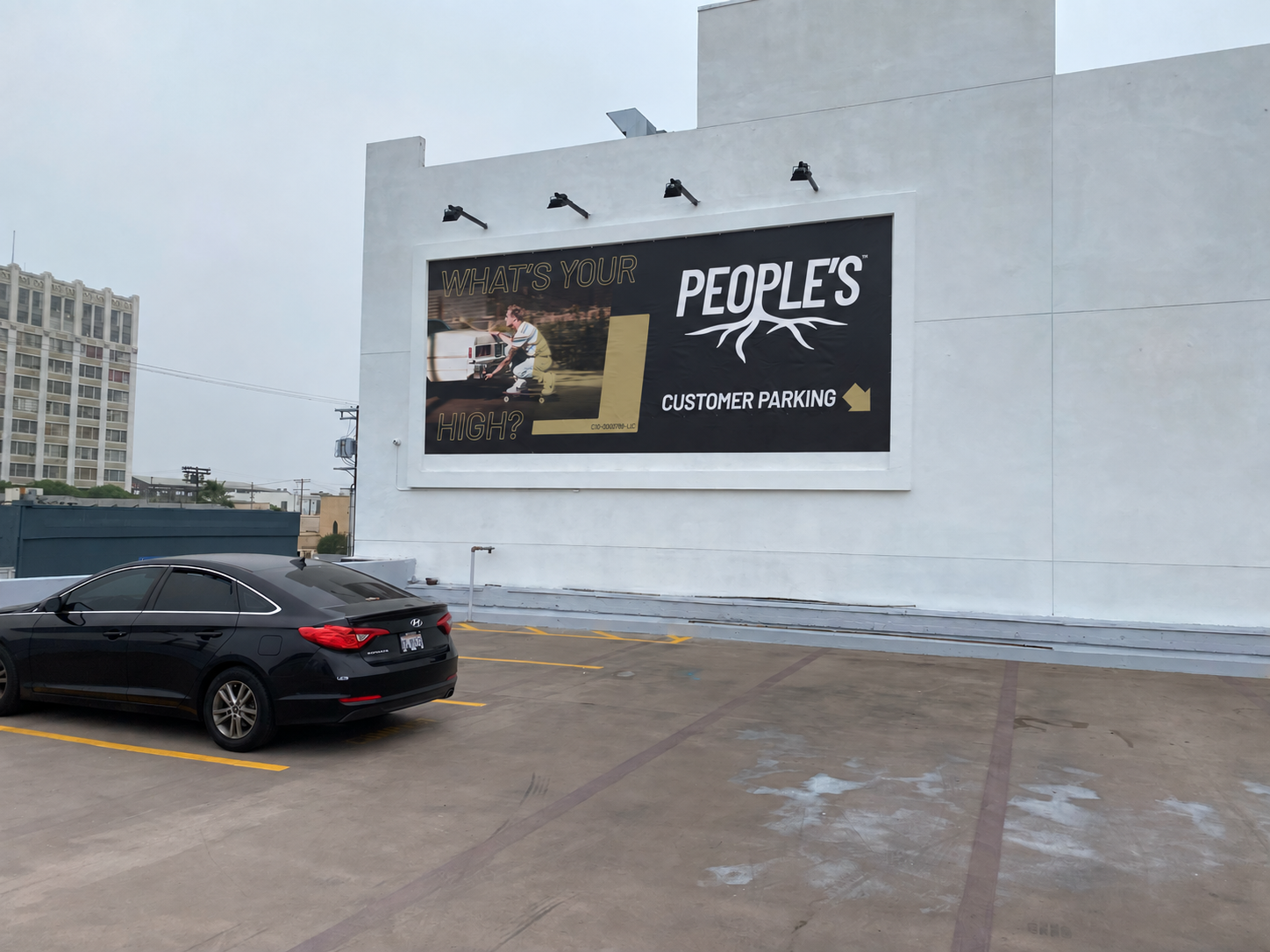
The campaign extended the invitation through billboards, wild postings, a digital truck and the building itself. “What’s Your High?” used skating, music, city life and personal passions instead of conventional cannabis imagery.
The second decision / Participation
Design participation around a purchase opportunity.
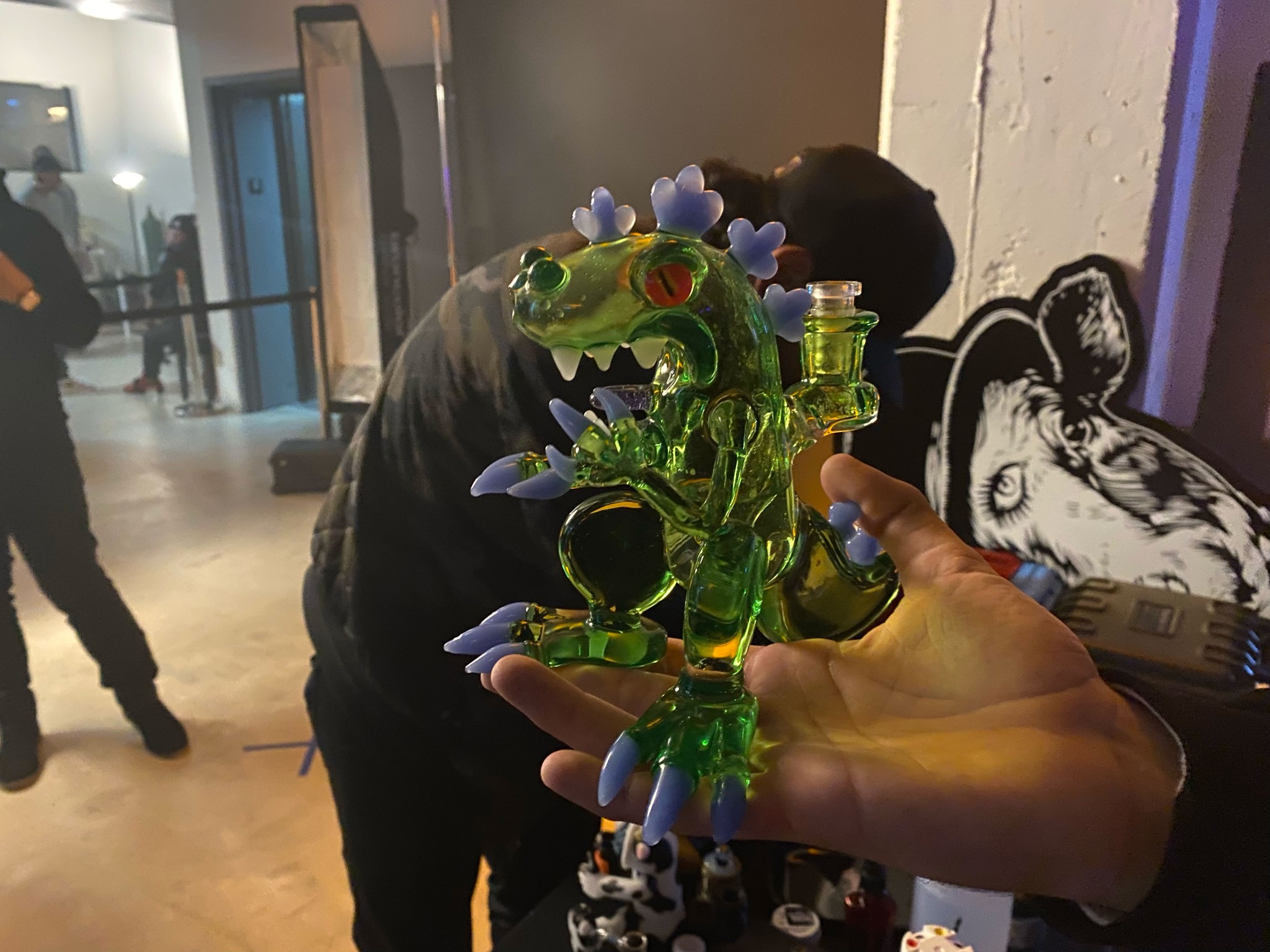
At the grand opening, visitors browsed the retail floor, then followed a simple route to the dispensary mezzanine, where brands and local makers created reasons to slow down and explore.
A passport rewarded that behavior. Complete the vendor route and the visitor earned an additional 20% off the final order plus a tote bag screen-printed on site. The incentive was attached to the behavior the experience was designed to create.
The store’s physical design mattered. Displays, checkout, mezzanine and event route worked as one customer journey.
The third decision / Continuity
How do you build events the store can actually support?
The opening was only the beginning. Car gatherings, skate demonstrations, poetry readings, a Super Bowl gathering and Mota Mania gave different communities a reason to return.
The parking structure became a second media surface. Food trucks and local makers had a destination. Attendee vouchers connected the adjacent event space to the dispensary. The operating lesson was equally important: promotions, customer flow and staffing had to be designed together.
Reported activity signals
The event program created measurable demand around the retail operation. These figures are directional reported counts: purchasing foot traffic is separated from total event attendance, and parking-lot attendance is not presented as store conversion.
Average during event-adjacent periods.
Total event attendance, including the surrounding activation area.
Additional visitors associated with the poetry events.
A destination for the event crowd—not a claim of retail conversion.
Lifecycle handoff
The event was the front door; digital segmentation carried the relationship forward.
Every event began with a check-in. The operating rule was simple: treat every attendee as an opportunity to begin a relationship. Event and retail check-ins fed contacts into People’s DTLA’s lead-capture system, where Klaviyo member segmentation organized the next interaction. Drip campaigns then led to deeper-engagement landing pages, including the Dutchie-powered e-commerce menu for browsing, ordering and pickup.
Culture creates the invitation. The store creates the handoff. The lifecycle system gives the relationship somewhere to go.
Public activation
Car club
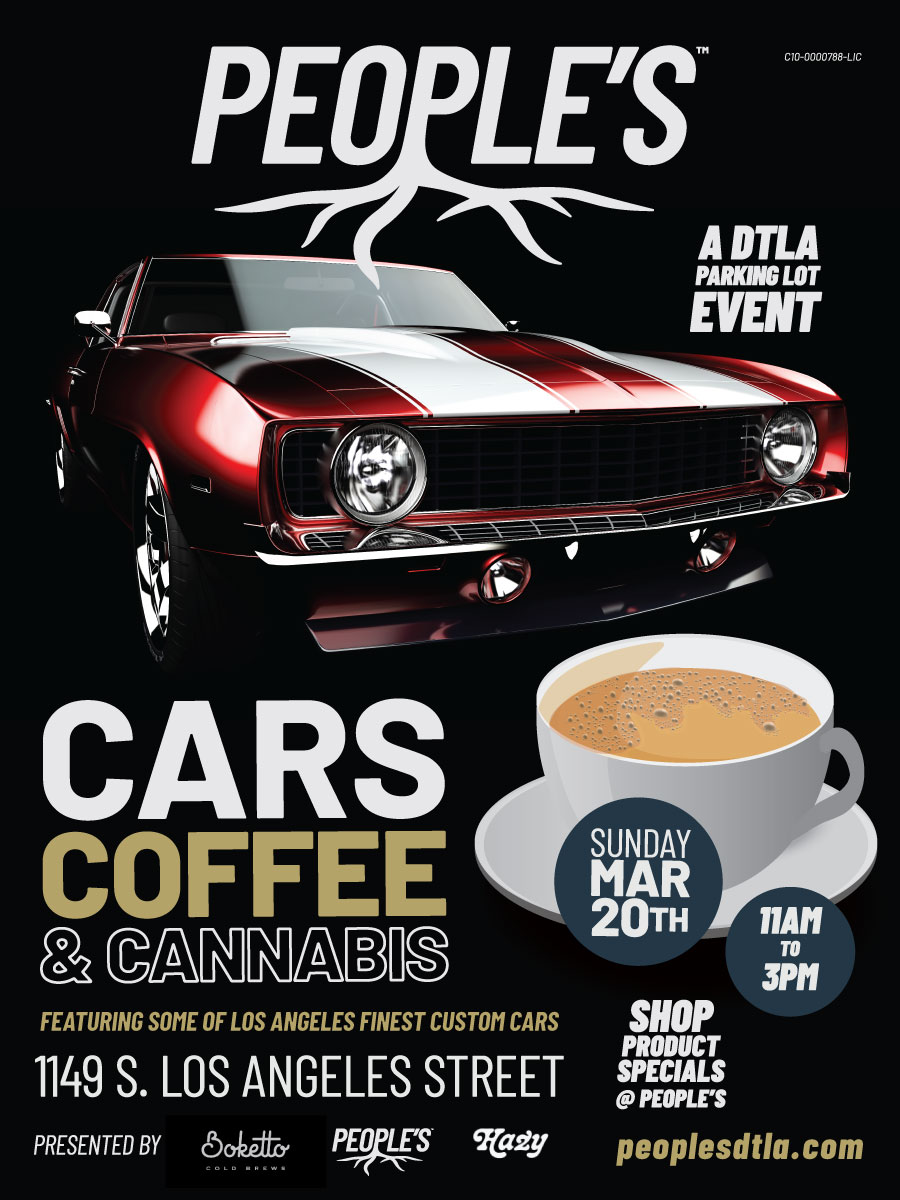
Cars, coffee and cannabis made the parking structure a low-friction introduction: a recognizable local interest, an easy reason to linger, and a clear route back to the store.
Event production partner: HAZY.

4·20 tentpole
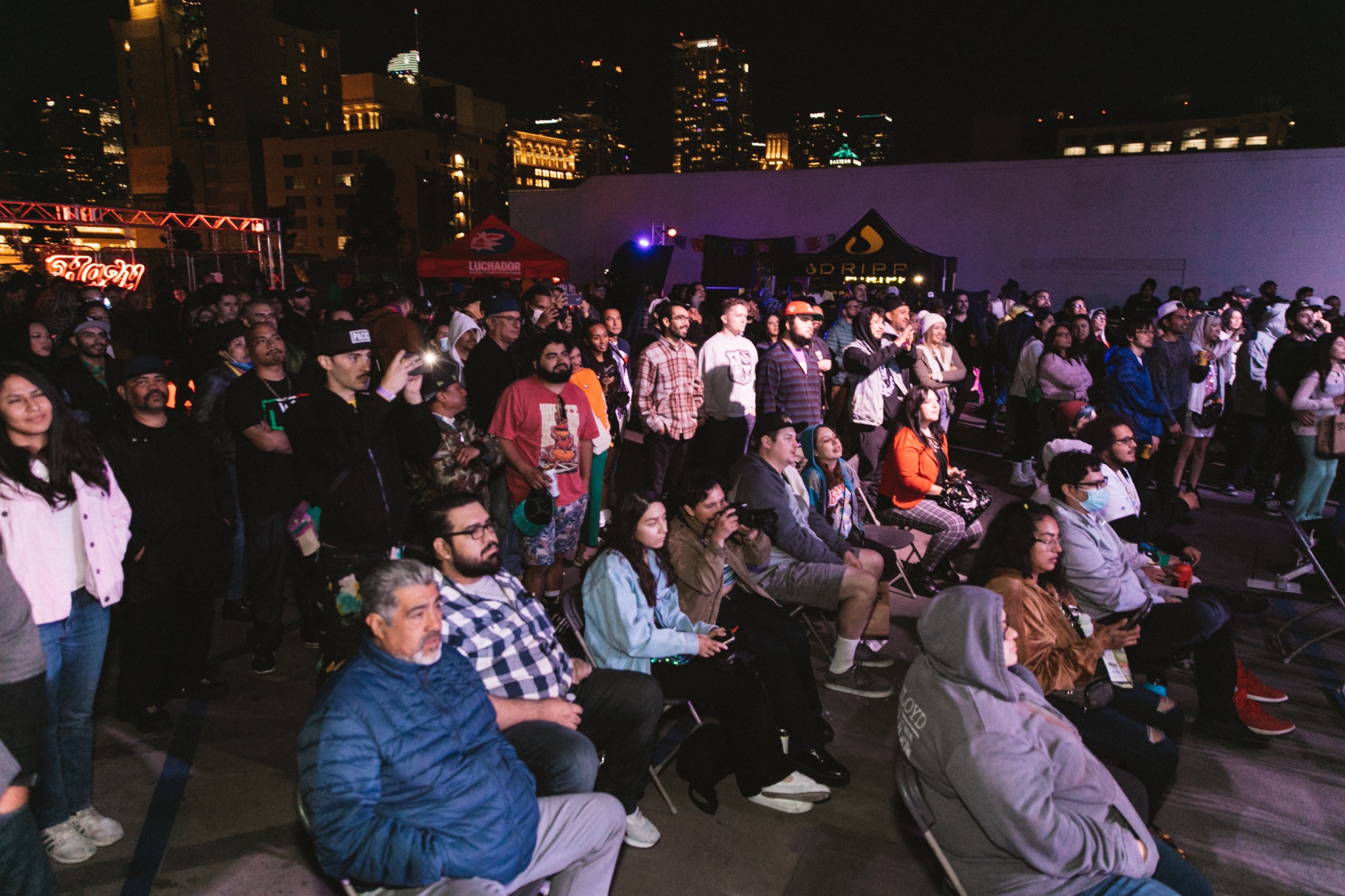
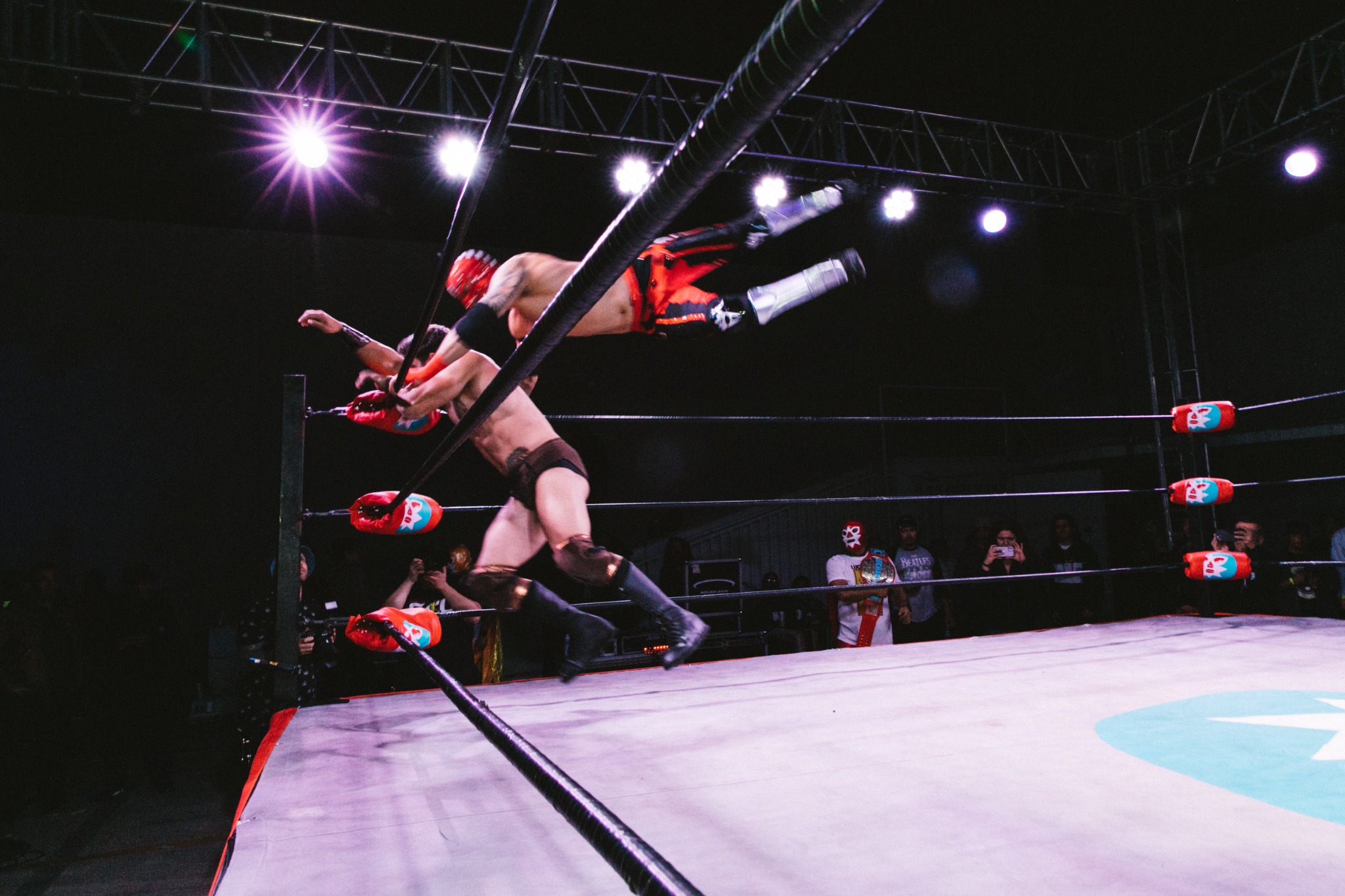
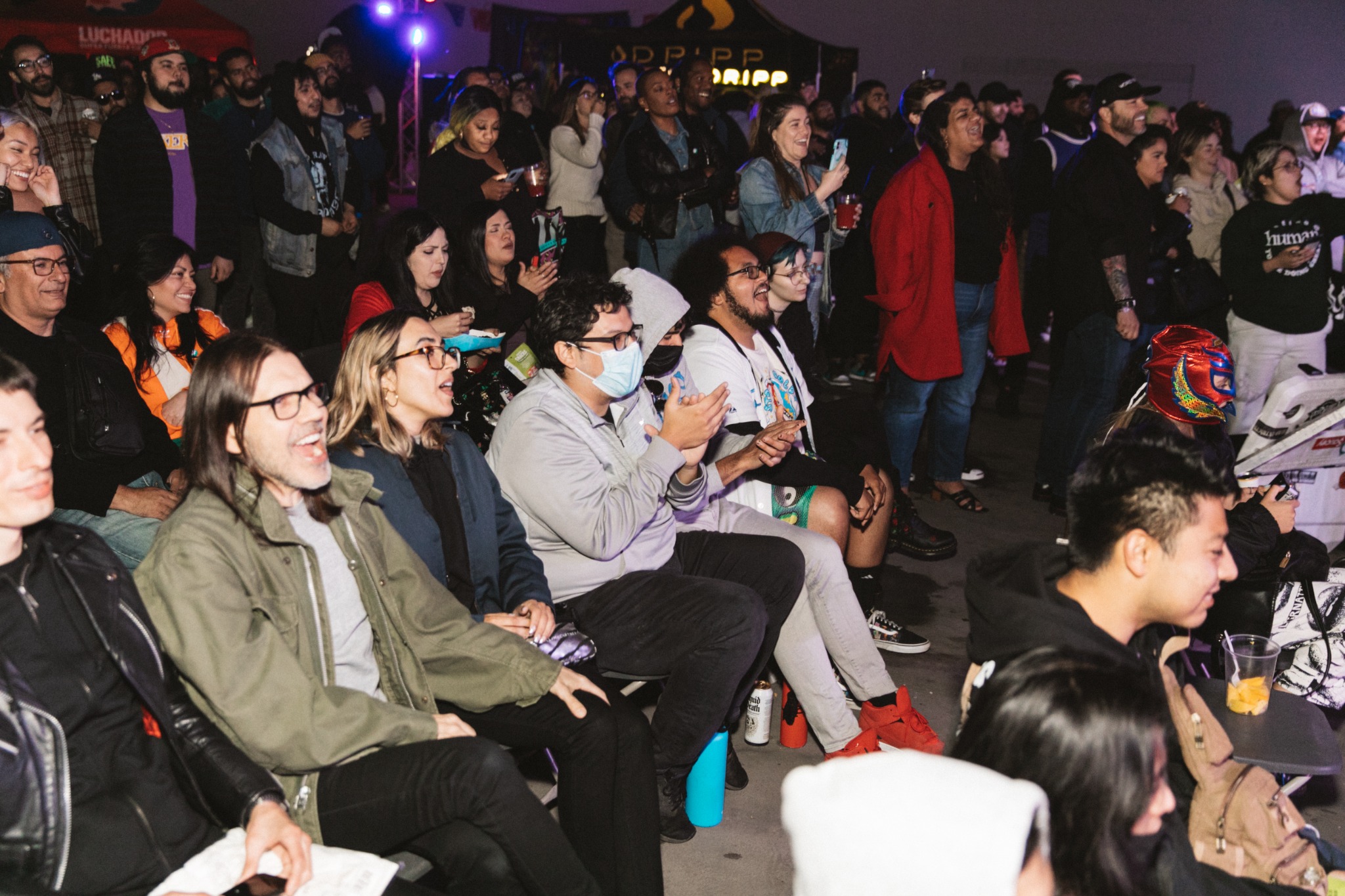
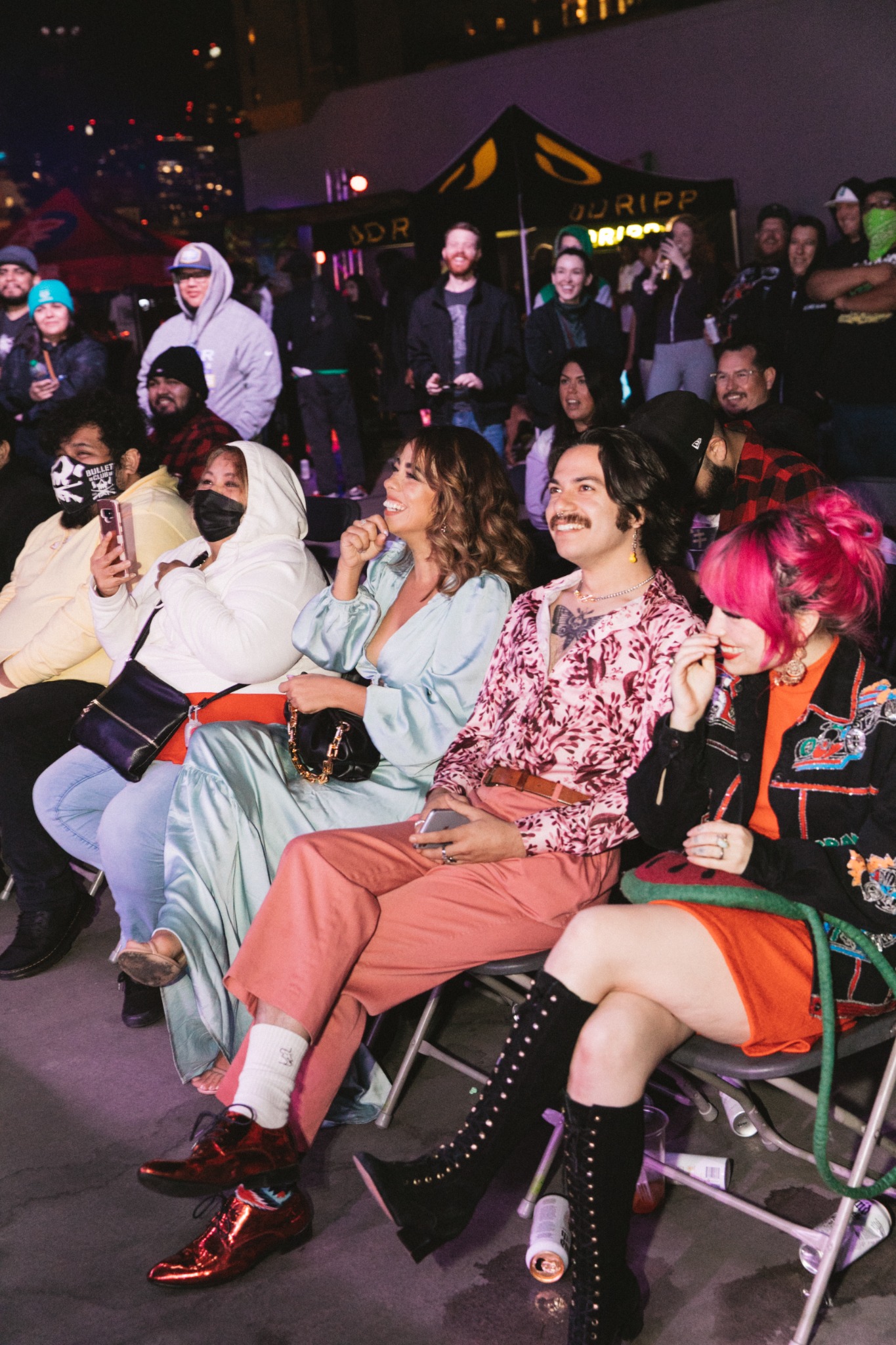
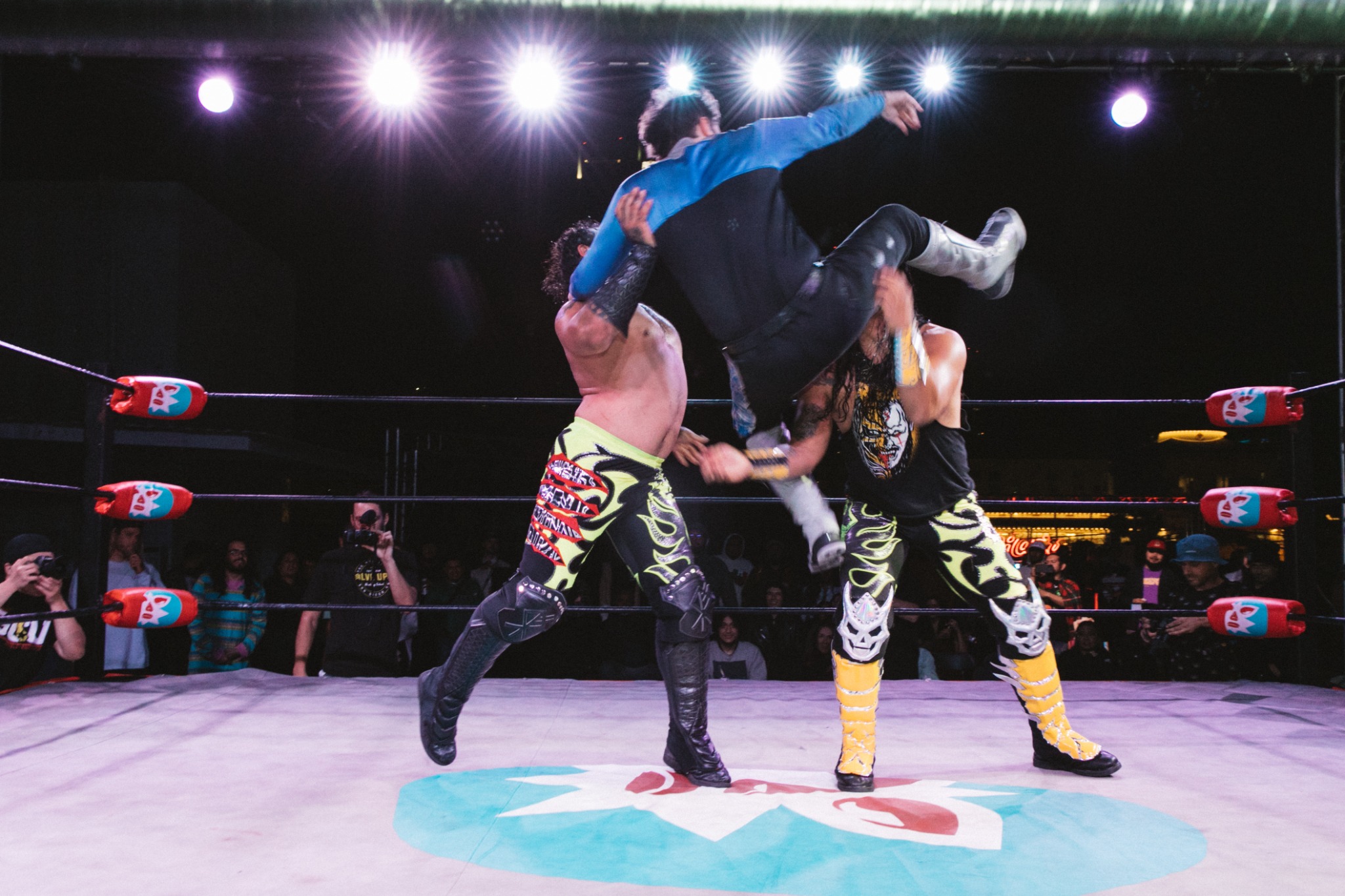
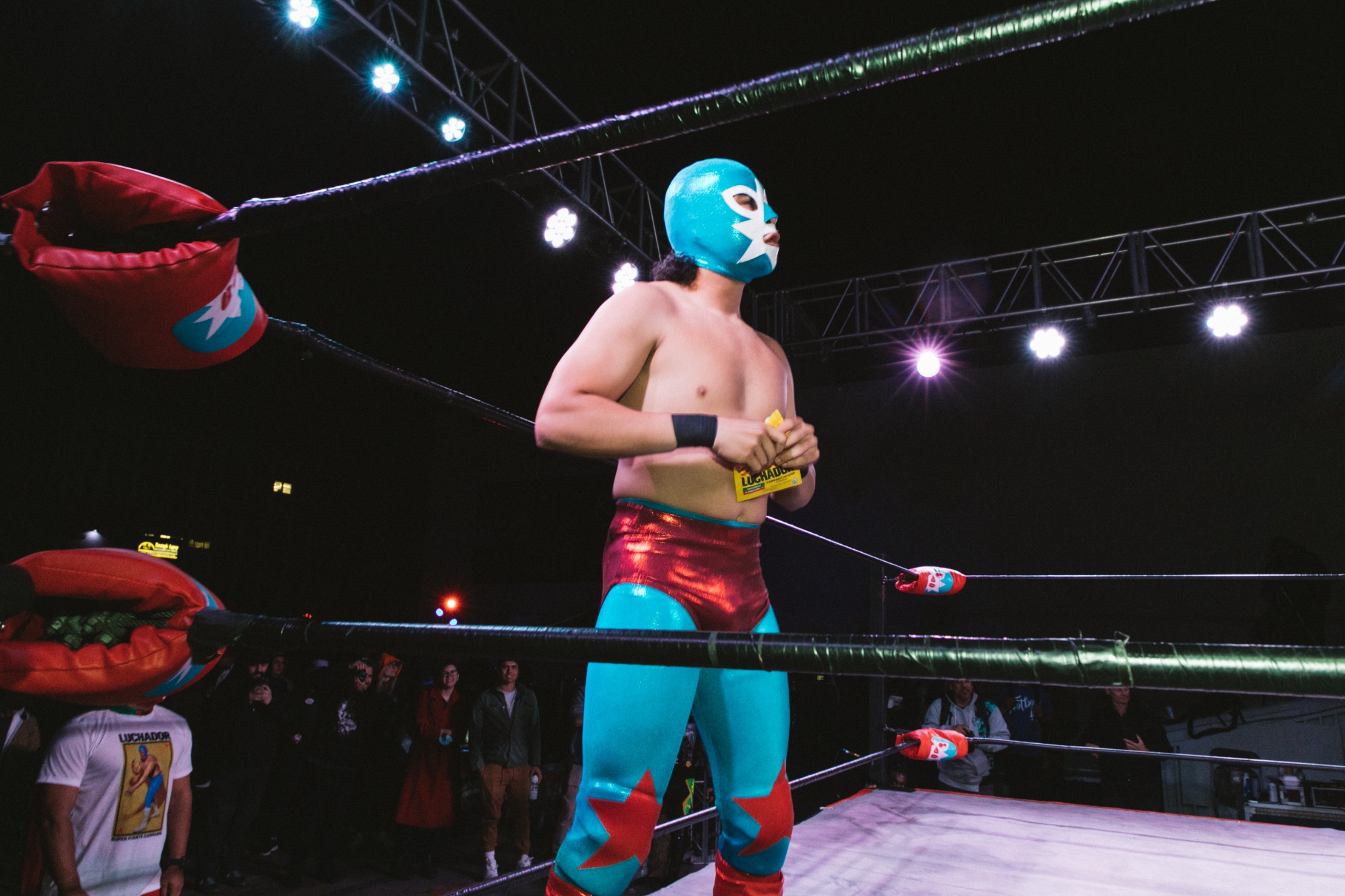
Mota Mania
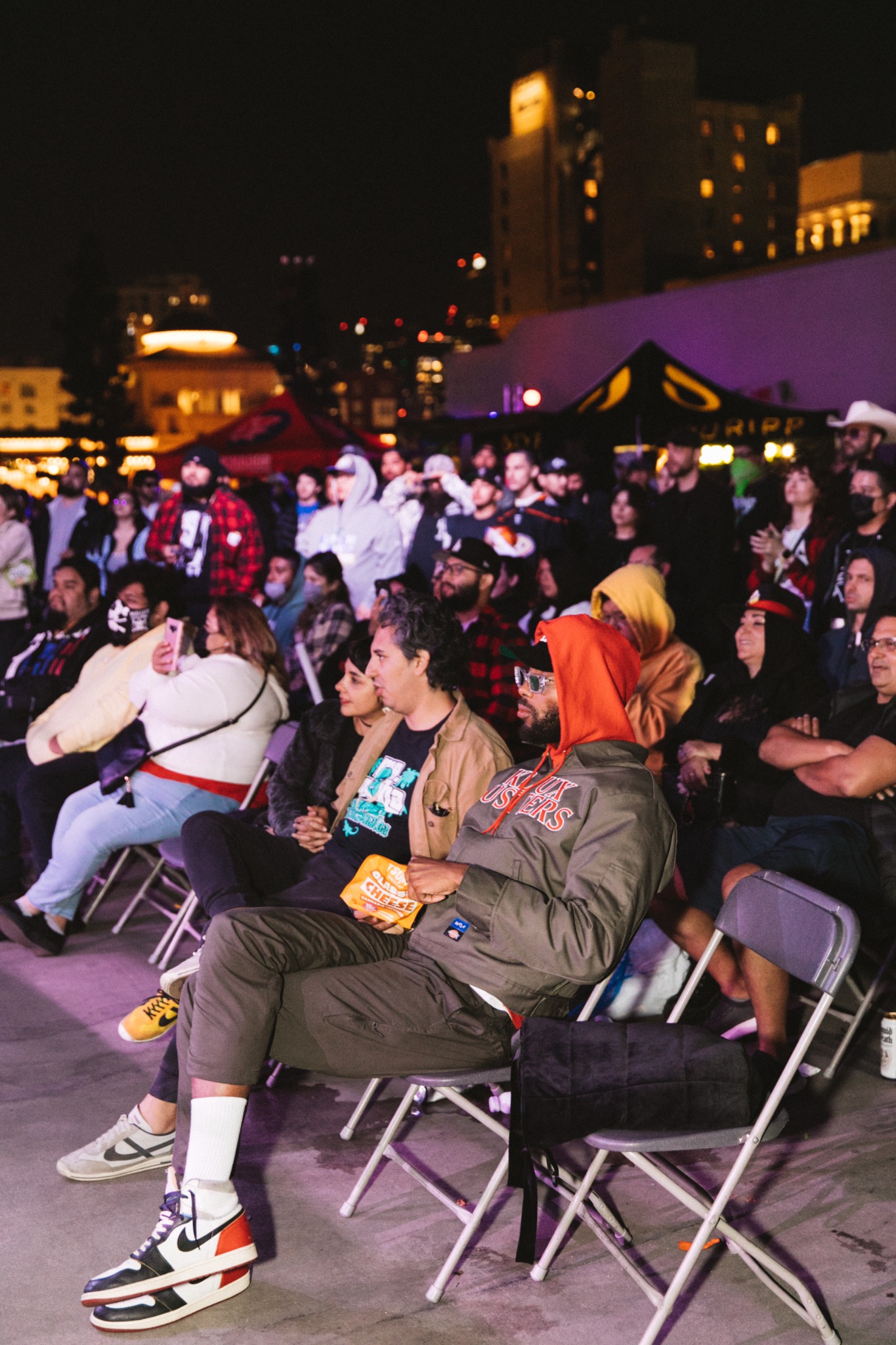
Mota Mania turned the parking lot into a repeatable cultural tentpole: a staged spectacle, a social crowd and an adjacent retail destination that could absorb the attention.
Event production partner: HAZY.
Members programming
Super Bowl gathering
Event production partner: High Rise Media.
Members programming
Skate demonstrations
Members programming
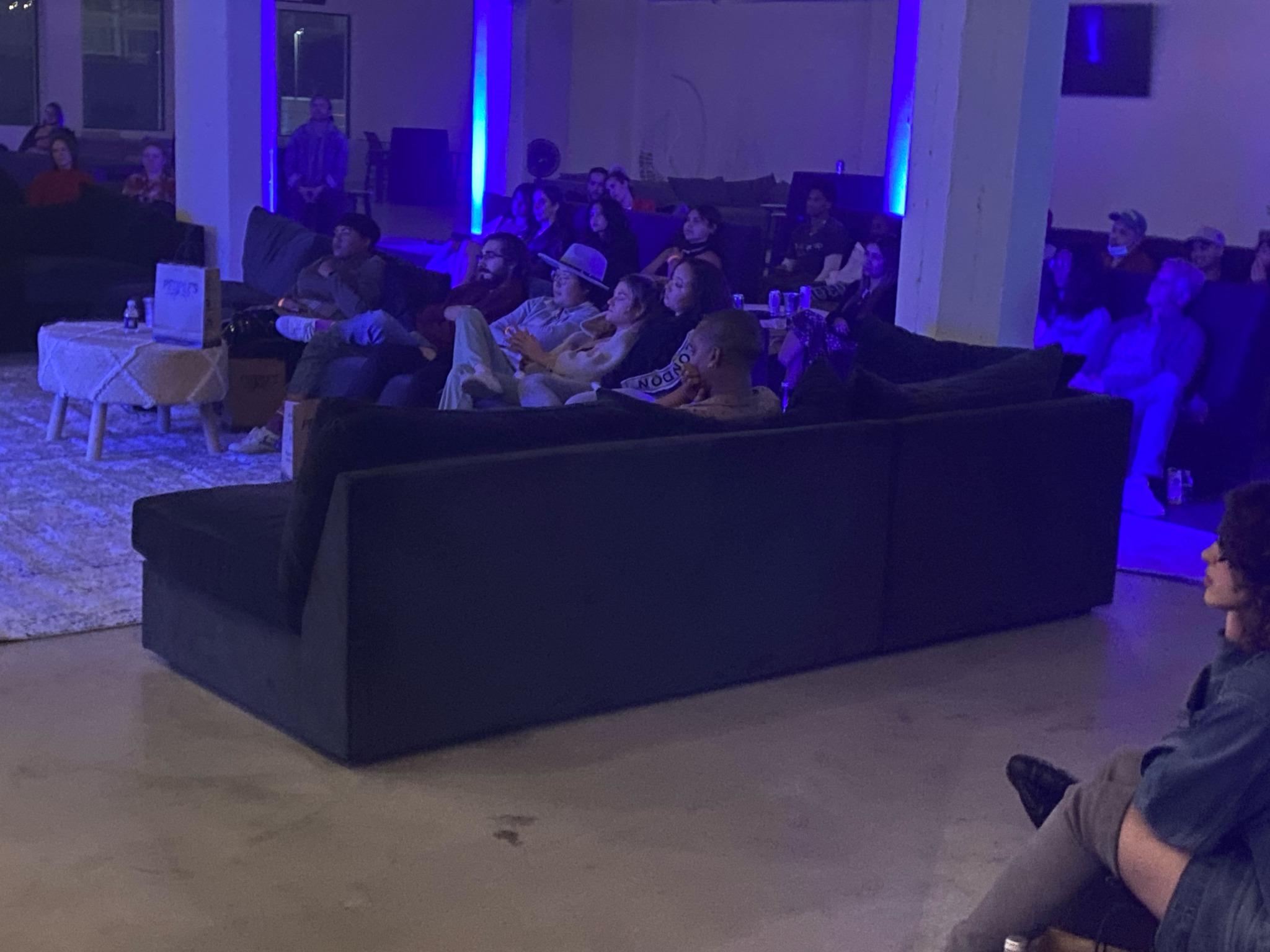
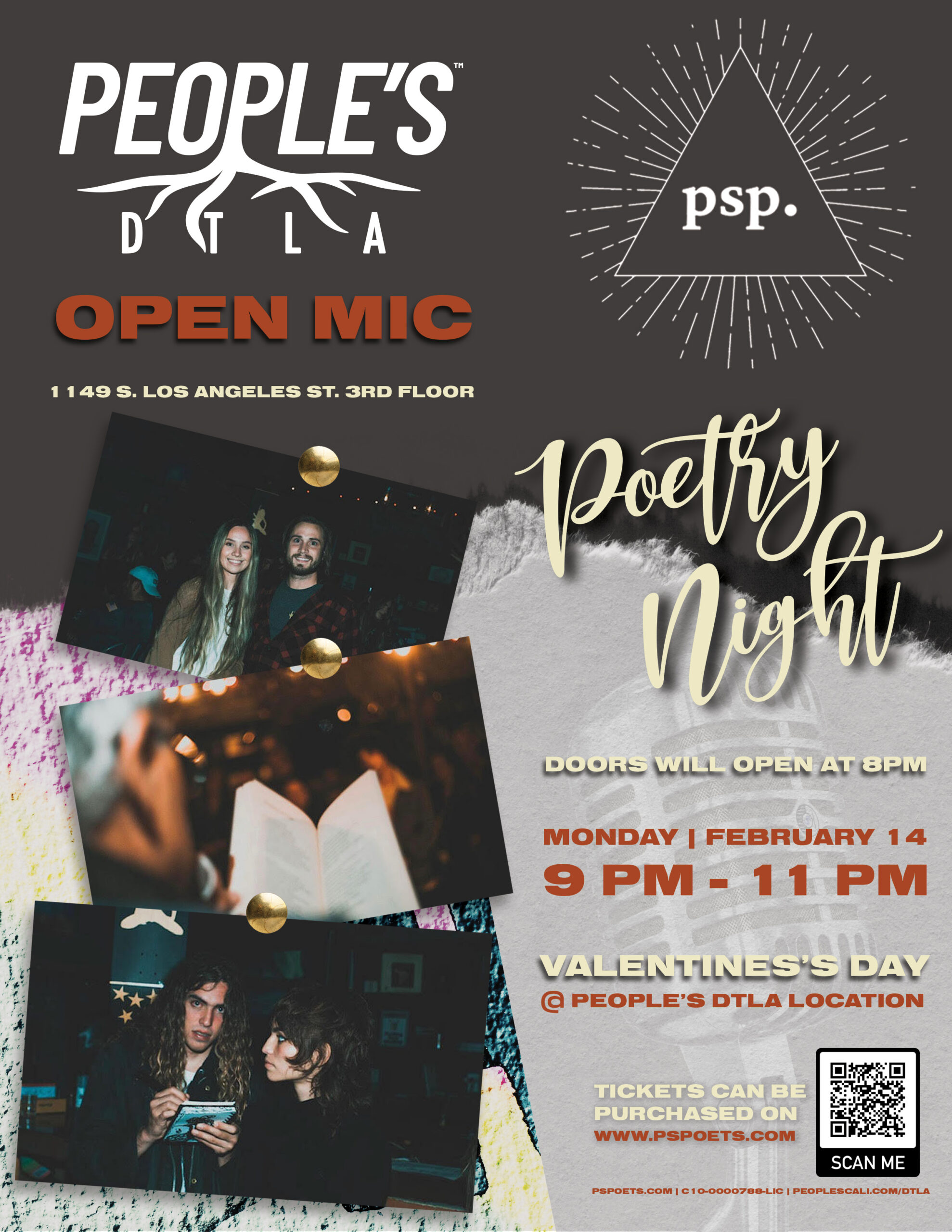
Poetry readings
Members-club Poetry Night sponsored by PSPoets (PSPoets.com).
What the work demonstrates
A new physical destination earns relevance by participating in the culture that already surrounds it—not by trying to manufacture culture around itself.
For regulated CPG
Translate compliance and local sensitivity into a shopper route that still feels human.
For retail and hospitality
Use neighboring relationships and recurring reasons to visit to make a location part of the neighborhood’s routine.
For operators
Separate evidence of participation from proof of conversion, then measure the handoff you actually need to improve.
Three commercial takeaways
What I would carry into another launch.
01 / Introduction
Use neighboring commerce as the introduction.
Give nearby businesses something useful, and give their customers a clear next step.
02 / Purchase
Design participation around a purchase opportunity.
Attach the offer to the behavior you want the experience to create.
03 / Operations
Build recurring tentpoles the store can support.
Plan promotion, staffing and customer flow together before adding another event.
The carry-forward
Culture gets attention. The retail mechanism gives it somewhere to go.
Meet People Where They Culture™ means building the introduction, the experience and the purchase path as one connected system.
Discuss your retail challenge